 English



First Brands: What the headlines miss – And what Supply Chain Finance (Payables) really means

 Deepesh Patel
Oct 07, 2025
Deepesh Patel
Oct 07, 2025
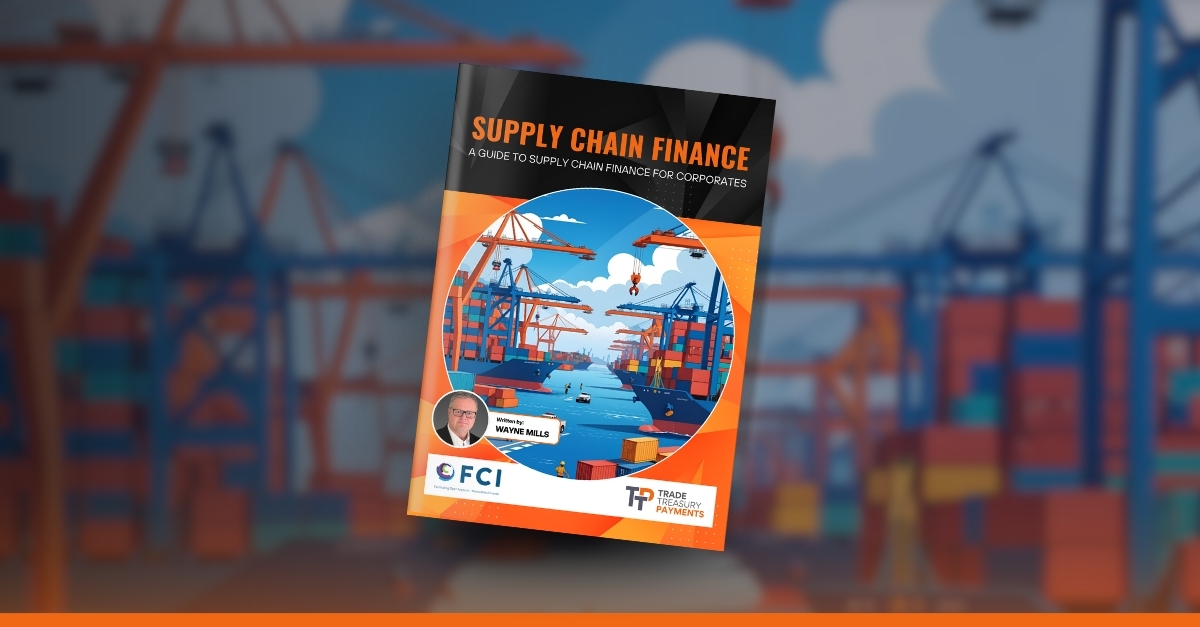
Corporates facing tighter liquidity, volatile markets, and fragile supplier networks are turning to supply chain finance (SCF) as a critical tool for resilience, yet many still lack a clear understanding of how it works. To bridge this gap, Trade Treasury Payments (TTP) and FCI have released ‘Supply Chain Finance Guide for Corporates’, a practical handbook designed to help businesses navigate the complexities of SCF and embed it into their broader financial and procurement strategies.
The guide is authored by Wayne Mills, TTP Global Advisory Panel member and Founder of Atom Advisory. The guide is a comprehensive and informative resource addressing both conceptual and practical issues, helping businesses respond to growing demands for financial resilience, operational efficiency, and responsible engagement with customers and suppliers.
Supply chain finance, a set of solutions that optimise working capital and cash flow, has emerged as a vital enabler of business continuity. Yet many organisations lack the practical knowledge to design and implement effective programmes.
‘Supply Chain Finance Guide for Corporates’ addresses this knowledge gap by offering a clear, accessible, and actionable framework for businesses of all sizes. Covering everything from SCF fundamentals to advanced insights from corporate users, it is intended as the go-to resource for CFOs, treasury teams, procurement leaders, and supply chain managers seeking to integrate financing solutions into their wider business strategy.
By combining strategic insight with practical tools, the guide aims to demystify SCF and encourage corporates to adopt financing solutions that unlock value across the supply chain.
According to industry research, over $2 trillion in working capital is trapped in global supply chains, limiting both corporate agility and supplier growth. SCF solutions enable corporates to manage cash conversion cycles more effectively while building resilience across supplier and customer relationships.
In the wake of recent disruptions, companies are recognising that supply chain health directly impacts business performance. Yet despite its proven benefits, SCF adoption remains uneven. The guide’s release comes at a time when boards, investors, and regulators are urging firms to manage supply chain risk more proactively.
Eleanor Hill, Treasury Editor, Trade Treasury Payments (TTP), said, “In the current world of open-account trade, there is an engine with the power to widen access to liquidity and strengthen real economies – supply chain finance. SCF steadies the system, unlocks liquidity where it is most needed, keeps goods moving, and builds resilience up and down the chain.”
Neal Harm, Secretary General, FCI, said, “FCI’s four-corner model, supported by our Edifactoring platform, provides a secure and standardised framework for cross-border receivables finance. With a network of more than 400 members in over 90 countries, we’ve built a practical backbone that allows even smaller firms to trade internationally with greater confidence.”
Wayne Mills, TTP Global Advisory Panel member and Founder of Atom Advisory, “Despite the benefits on offer, we must also be clear-eyed about the obstacles. Development is uneven, definitions and disclosures remain fragmented, and accounting scrutiny can slow adoption. But these challenges are not reasons to step back – they are reasons to engage more deeply. With the right tools and a shared language, SCF can become a driver of positive change.”
The ‘Supply Chain Finance Guide for Corporates’ is now available for download at https://tradetreasurypayments.com/editions/guide-supply-chain-finance-corporates.


Oct 17, 2025

Oct 16, 2025


Oct 16, 2025

Oct 16, 2025


Oct 15, 2025


Trade Treasury Payments is the trading name of Trade & Transaction Finance Media Services Ltd (company number: 16228111), incorporated in England and Wales, at 34-35 Clarges St, London W1J 7EJ. TTP is registered as a Data Controller under the ICO: ZB882947. VAT Number: 485 4500 78.
© 2025 Trade Treasury Payments. All Rights Reserved.