 English



First Brands: What the headlines miss – And what Supply Chain Finance (Payables) really means

 Carter Hoffman
 Pascal Marclay
 Christophe Salmon
Aug 21, 2025
Christophe Salmon
Aug 21, 2025
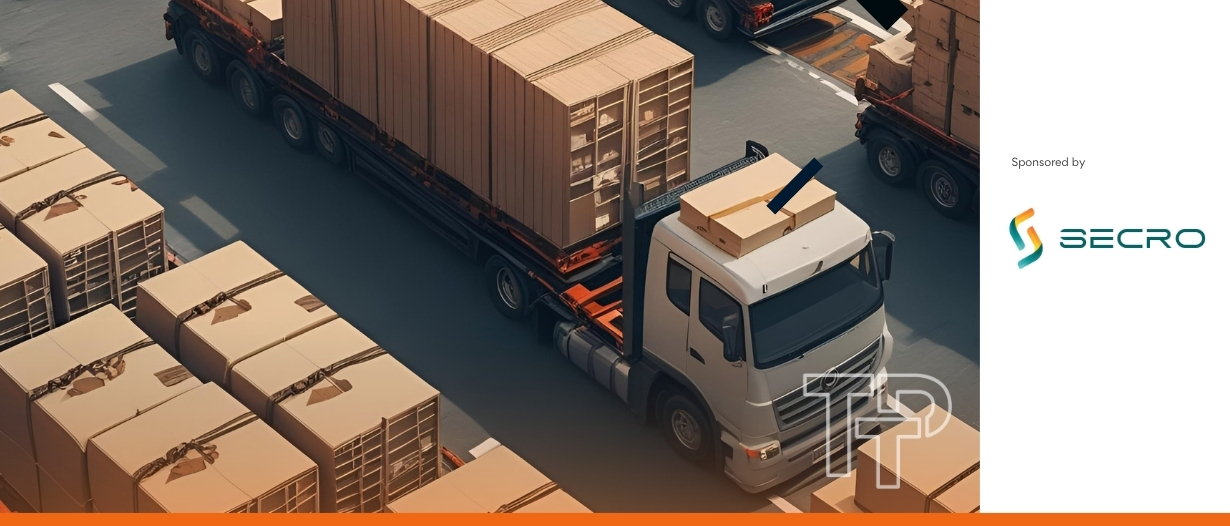
For decades, the global movement of goods has been sustained by paper. Bills of lading, warehouse receipts, and inspection certificates still cross continents in courier pouches, even as almost every other sector has embraced digital records.
While some may consider the persistence of paper in trade to be a quaint tradition, the reality is that it is a costly vulnerability simmering among ink stamps, carbon copies, and courier envelopes that still underpin so many trade transactions today.
The UN Economic and Social Commission for Asia and the Pacific (UN ESCAP) estimates that fewer than 5% of bills of lading are issued electronically, despite digital formats being available for more than 20 years. To get a sense of the cost, we can turn to an APEC study, which quantified the cost of trade documentation at between 1.8% and 3% of transaction value, a margin that, in competitive markets, can be decisive.
And that’s before the calculation includes those who profit from bending the rules. High-profile frauds such as Hin Leong and Agritrade have exploited weaknesses in paper-based systems, where duplicate originals and slow verification processes allowed the same cargo to be pledged multiple times. In the banking sector, the retreat of lenders such as ABN AMRO and BNP Paribas from certain commodities trade finance markets is often linked to risk appetites shaped by such losses (though it is widely thought that financial regulators, through frameworks such as Basel IV, have also influenced this retrenchment by increasing capital requirements for higher-risk assets, making certain commodity exposures less attractive).
If the benefits are so clear, the natural question is why has digitisation not already transformed trade?
To answer this question, TTP spoke to Christophe Salmon, Secro’s newly appointed strategic advisory board member, and Pascal Marclay, Secro’s Chief Commercial Officer and Country Manager for Switzerland.
The reasons are as much cultural and institutional as they are technical. Decades of practice have embedded paper-based workflows into the DNA of supply chain operations. Systems have been built, contracts drafted, and relationships managed around physical documents. For many participants, especially in emerging markets, these processes feel more certain because they are familiar.
Technical barriers compound this inertia. Legacy IT systems in shipping, banking, and logistics were not designed for interoperable digital documents. Integration can require costly, multi-year transformation projects, commitments that many firms are reluctant to undertake without clear regulatory certainty or client demand.
Academic studies of technology adoption in trade consistently find that the absence of network effects is a major brake, since without a critical mass of counterparties also using the system, early adopters see little immediate benefit.
In this case, real-world events support the academic’s musings. The collapse of TradeLens, IBM and Maersk’s once hotly-touted blockchain-based trade documentation platform, was attributed, in part, to insufficient industry buy-in. At its peak, TradeLens had onboarded carriers representing more than half of the world’s container capacity, but the absence of certain global carriers left coverage incomplete.
Through the example of TradeLens, we learned that even a well-funded, technically sound initiative can falter if stakeholders perceive competitive risks in sharing data or if benefits are unevenly distributed. Governance models for successful trade digitalisation, then, must be genuinely neutral and solutions must be designed around multi-party incentives rather than single-entity control.
From a legal perspective, the digital trade world that TradeLens operated in before its collapse in 2022 looks very different from the one we occupy today.
In the past five years, several jurisdictions have moved decisively to implement the United Nations Commission on International Trade Law (UNCITRAL) Model Law on Electronic Transferable Records (MLETR), or equivalent reforms.
MLETR provides a framework for giving digital documents the same legal effect as their paper equivalents. Its principles address core legal requirements such as singularity, control, and integrity, which are the features that give trade documents their enforceability in court.
Singapore amended its Electronic Transactions Act in 2021 to align with MLETR. The United Kingdom followed suit in 2023 with its Electronic Trade Documents Act, and France in 2024. Today there are 11 jurisdictions around the world that have adopted MLETR-inspired legislation, with the African nation of Mauritius being the most recent joiner. While this may seem like a small number of countries, when TradeLens was officially launched in August 2018, MLETR had not yet been adopted by any jurisdiction.
Each reform is a signal to market participants that digital documents are becoming recognised instruments in major trading hubs. The ICC DSI’s monitoring framework shows that other countries are actively reviewing comparable changes, creating a progressively denser network of jurisdictions where electronic records are enforceable.
This legal shift matters because it eliminates a core objection from risk-averse buyers and banks. When the enforceability of a digital document is clear, arguments for retaining paper default to convenience or preference, both of which are easier to challenge than legal uncertainty.
Unfortunately, while legal recognition is absolutely necessary, it alone is not sufficient, which brings us to tokenisation and the trust layer.
In a multi-party ecosystem, trust can be thought of as both a currency and a lubricant. Tokenisation (which is a term for representing physical assets or documents as unique, verifiable digital tokens) is a way to extend trust across organisational boundaries. By linking a digital token to a specific right, such as ownership of cargo, and making that link auditable, tokenisation can prevent the duplication and fraud risks that are inherent in paper systems.
The Bank for International Settlements (BIS) and the Financial Stability Board (FSB) have both noted the potential of tokenisation to reduce settlement risk and enable new financing models, but they also caution against assuming that technology alone can address governance issues. Neutral, rules-based platforms are needed to ensure that all participants (from carriers to banks to shippers) can trust the integrity of the data without fearing that they are at some form of competitive disadvantage.
One practical example of a company building this type of ecosystem is the fintech Secro, which issues trade documents as unique digital tokens linked to the underlying cargo. Because the platform operates independently of any single carrier or bank, parties can transfer these tokens (and the rights they represent) without the duplication risks of paper or the perception of competitive bias.
Pascal Marclay, Chief Commercial Officer at Secro, told TTP, “Tokenisation of negotiable documents, and the legal robustness it provides, is a key differentiator. As a former banker, I see this as the main point — banking and trading are all about assessing, mitigating, and managing risk. Having a digital form that is as valid as the paper one is a major evolution. Furthermore, a token is agnostic: it applies to any type of flow, commodity, and document.”
Neutral governance and token-based integrity can create the conditions for adoption, but market confidence usually solidifies only when tested by events that expose the cost of inaction.
Trust in new systems rarely develops in the abstract, and in trade, momentum often follows the shock of failure or the visibility of success. The $3.5 billion collapse of Hin Leong in 2020 (enabled by duplicate paper bills of lading and slow, manual verification) forced banks to reassess their exposure in commodities trade finance. Several withdrew from entire sectors, pointing to the difficulty of managing risk in paper-bound environments. For platforms offering tamper-proof, transferable digital records, such moments turn theoretical advantage into a direct answer to a board-level risk concern.
Other shocks have been less scandalous but no less persuasive. During the pandemic, physical document flows became friction points in already strained supply chains. SWIFT found that courier delays in certain markets were adding days to cargo release times, an avoidable bottleneck if electronic documents had been in use. In these moments, the cost of inefficiency can be measured in demurrage charges and lost sales.
Christophe Salmon, a Strategic Advisory Board Member at Secro and former CFO of commodity firm Trafigura, said, “If you are ready to leave money on the table, digitisation can wait. But if you wait too long, you’ll face two types of cost: every time there is fraud, you’ll wish you had invested earlier; and you’ll remain less cost-efficient than your competitors. In this business, that is a strategic disadvantage.”
Yet even a well-timed proof point is not enough without a path to scale. The demise of TradeLens illustrated how quickly network effects stall without both neutrality and equitable benefit-sharing. By contrast, the Digital Container Shipping Association’s push for open standards (backed by carriers representing over 60% of global container capacity) has created a coordinated baseline for digital trade document adoption.
Practical adoption strategies often start small. Platforms such as Bolero and essDOCS have lowered onboarding friction through tightly scoped pilots with committed shippers or banks. By keeping early projects low-risk but highly visible, they have created the evidence that others can point to when confronting their own adoption hesitations.
No one can legitimately claim that the case for digital trade is hypothetical any longer. We now have proof of concept, proof of necessity, and a workable legal environment. Jurisdictions representing major trading hubs have adopted MLETR-aligned laws, and technology, from tokenisation to interoperable platforms, has matured to the point where fraud risk, duplication, and verification delays can be materially reduced. What remains now is the search for a willingness to implement these new solutions at scale.
The transition to digital trade will happen first where the incentives are aligned – between carriers and shippers, between banks and corporates, between regulators and industry bodies – and then ripple outward. Those who move early will influence the standards, shape the governance, and anchor the network effects that define the market’s operating rules. Those who wait will be forced to adapt to a system they had no part in designing.
In this equation, waiting to go digital is not a neutral stance. It is an active choice to preserve avoidable costs, to tolerate avoidable risks, and to concede the competitive ground to those who have already decided that the future of trade will be digital. The only real question is whether that future will be built with you, or without you.

Oct 17, 2025

Oct 16, 2025


Oct 16, 2025

Oct 16, 2025


Oct 15, 2025


Trade Treasury Payments is the trading name of Trade & Transaction Finance Media Services Ltd (company number: 16228111), incorporated in England and Wales, at 34-35 Clarges St, London W1J 7EJ. TTP is registered as a Data Controller under the ICO: ZB882947. VAT Number: 485 4500 78.
© 2025 Trade Treasury Payments. All Rights Reserved.