 English



First Brands: What the headlines miss – And what Supply Chain Finance (Payables) really means

 Sean Edwards
 Duarte Pedreira
 Daniela Barrdear
 Lorna Pillow
 Silja Calac
 Simon Cook
 Zulema Townsend
 Isabella Lewis
 Paul Coles
 Chris Hall
 Cruz Gonzalez Agrelo
Aug 05, 2025
Cruz Gonzalez Agrelo
Aug 05, 2025
What do letters of credit, MRPA agreements, URTEPO rules and credit insurance all have in common?
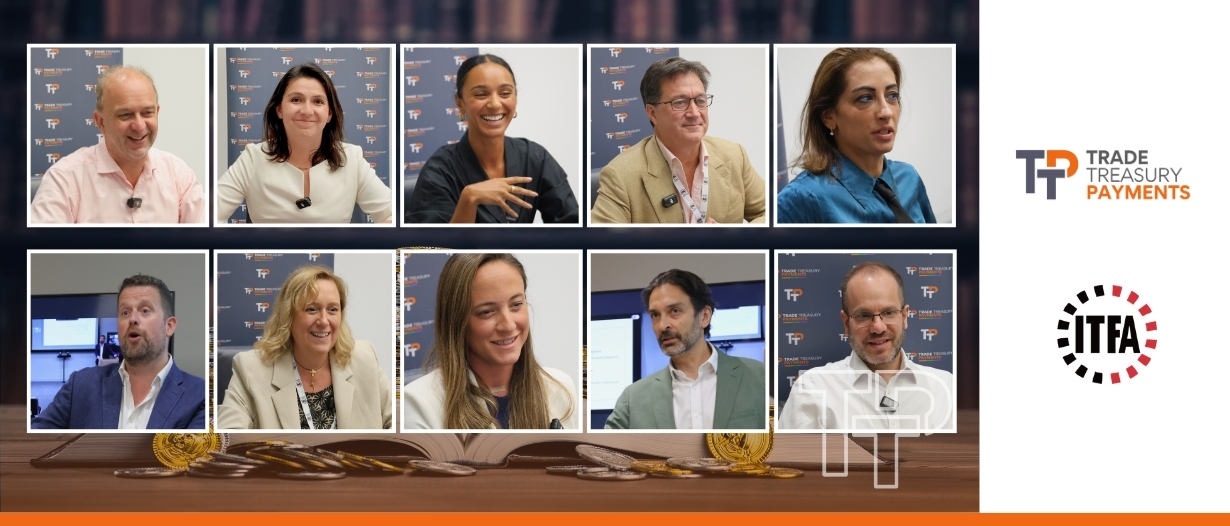
They’re all part of the trade finance toolkit, and in this special podcast edition, we break them down in plain English.
Recorded live at the ITFA Educational Seminar at A&O Shearman in London, Trade Finance Terms Explained brings together short, punchy explainers from ITFA board members and experts across the field. Each guest answers one question in five minutes or less, covering everything from how trade finance works in practice, to ESG-linked transactions, supply chain regulations, and digital instruments.
This podcast features:
What is trade finance, and why does it matter?
Sean Edwards opens the session with a wide-angle view of trade finance as the lubricant of global trade. He explains how this low-risk but capital-intensive business is evolving under regulatory pressures, and why new actors – from insurers to institutional investors – are playing an increasingly important role.
How does trade finance actually work?
Duarte Pedreira explains the real-world mechanics of a trade finance transaction. From bridging buyer-seller risk to addressing challenges such as country risk, currency fluctuation, and delivery failure, he sets out the fundamentals that make trade possible.
How are structured deals secured?
Daniela Barrdear outlines how structured trade and commodity finance transactions are secured through legal rights over goods, receivables, and cash accounts. She emphasises the importance of enforceability and jurisdiction-specific structuring.
What is forfaiting and where is it used?
Lorna Pillow introduces modern forfaiting – the non-recourse discounting of promissory notes and bills of exchange – and highlights the legal clarity it offers. She also explains the role of ITFA’s URF800 rules in standardising practice.
What are URTEPO rules, and how do they support digital trade?
Pillow continues with an overview of URTEPO: a set of uniform rules that enable the digital transfer of payment obligations. She explains how the rules are designed to be technology-neutral and can co-exist with paper-based instruments.
What is supply chain finance?
Silja Calac offers a comprehensive explanation of supply chain finance, drawing on the definition of the Global Supply Chain Finance Forum. She unpacks how various event-driven finance techniques can optimise working capital, manage risk, and improve buyers’ and suppliers’ balance sheet efficiency.
What are the main trade finance instruments?
Simon Cook provides a concise overview of key trade finance instruments, including letters of credit, demand guarantees, promissory notes and bills of exchange. He explains their mechanics, parties, and how they create certainty in cross-border deals.
How are these instruments governed?
Cook continues with a discussion on the ICC rules – UCP600, URDG758 and ISP98 – that govern the use of trade instruments. He also touches on current legal debates around governing law and the potential modernisation of the Bills of Exchange Act.
What are the key supply chain regulations?
Zulema Townsend examines the regulatory landscape shaping global supply chains. She focuses on recent developments such as the EU Corporate Sustainability Reporting Directive, due diligence mandates, and product-specific rules targeting forced labour and deforestation.
Why do these regulations matter commercially?
Isabella Lewis builds on this by outlining the financial and contractual consequences for non-compliance. She explains why finance providers must stay closely engaged, from penalties and product seizures to reputational risks and loan covenant breaches.
What does environment, social, governance (ESG) mean in trade finance today?
Sean Edwards returns to reflect on the future of ESG in trade finance. He previews ITFA’s forthcoming ‘Social Return on Investment’ model, developed with Rebecca Harding, and calls for greater recognition of the social dimension, particularly in emerging markets.
How is risk managed in trade finance?
Paul Coles discusses the toolkit for risk mitigation, from insurance and participations to securitisation and syndication. He highlights the growing role of institutional investors and the need for flexible, transaction-specific strategies.
What is an MRPA and why is it used?
Coles goes on to explain the Master Risk Participation Agreement (MRPA), commonly used to transfer risk between banks and participants. He also introduces ITFA’s MARA, a complementary framework better suited to open account and receivables finance.
What is credit risk insurance, and how does it work?
Chris Hall outlines how credit and political risk insurance enables trade by protecting lenders and corporates from non-payment. He notes the product’s strong claims record and its role in expanding capacity and confidence.
What is the broader role of credit insurance in global trade?
Cruz Gonzalez closes the episode by framing credit insurance as a shared tool used by both corporates and lenders. He explains how it unlocks lending capacity, supports risk management and gives banks more flexibility in financing deals.

Oct 17, 2025

Oct 16, 2025


Oct 16, 2025

Oct 16, 2025


Oct 15, 2025

Trade Treasury Payments is the trading name of Trade & Transaction Finance Media Services Ltd (company number: 16228111), incorporated in England and Wales, at 34-35 Clarges St, London W1J 7EJ. TTP is registered as a Data Controller under the ICO: ZB882947. VAT Number: 485 4500 78.
© 2025 Trade Treasury Payments. All Rights Reserved.