 English



First Brands: What the headlines miss – And what Supply Chain Finance (Payables) really means

 Merisa Lee Gimpel
 Alex Fenechiu
 Chetan Talwar
Sep 19, 2025
Chetan Talwar
Sep 19, 2025
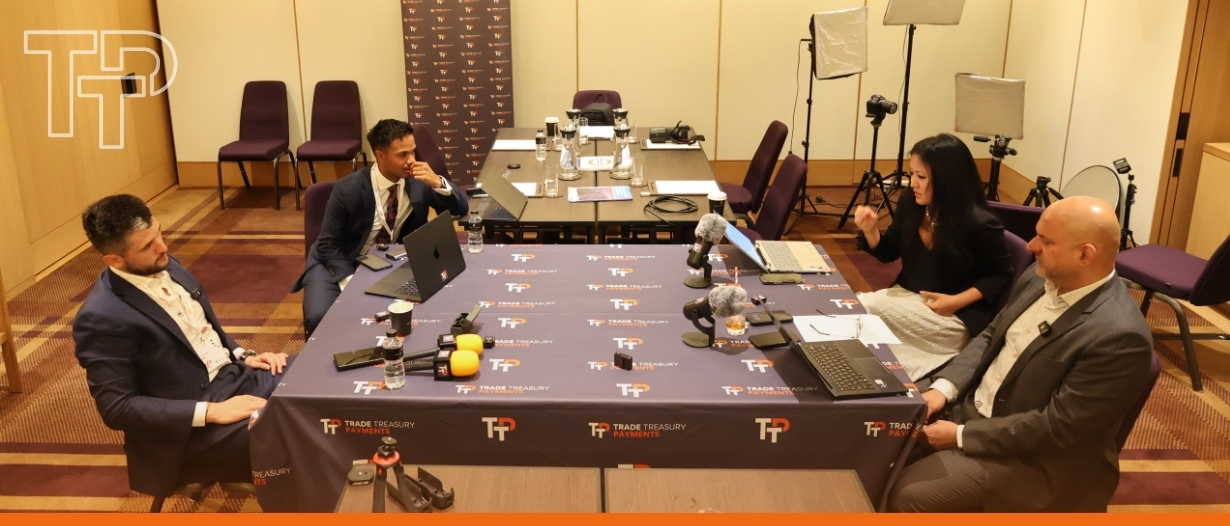
At 8am in Singapore, over breakfast and in the midst of a packed week of conferences, the conversation turned to one of trade finance’s most pressing questions: how can supply chain finance move from niche product to mainstream scale?
Moderated by Merisa Lee Gimpel, founder of Digital Trade Works and a member of the TTP Advisory Council, the live podcast brought together Alex Fenechiu, co-founder and CRO of Finverity, and Chetan Talwar, supply chain finance lead at the Asian Development Bank (ADB)’s Trade & Supply Chain Finance Program (TSCFP).
“We want to look at supply chain finance from the perspective of how it can move from a niche solution into really scaling. I’m talking 10X type scaling,” Lee Gimpel said at the outset. Her thesis rested on three pillars: deep tech, deep tier, and deep impact.
Supply chain finance (SCF), as defined by the Global Supply Chain Finance Forum, is the use of financing and risk-mitigation techniques to optimise working capital in open-account trade, triggered by supply chain events and enabled by visibility of the underlying flows. It has long been recognised as a win-win product for buyers and suppliers. Yet despite rapid growth, SCF remains concentrated in large corporates and tier-one suppliers, leaving many SMEs in developing markets excluded.
For Fenechiu, the first step is to acknowledge how broken onboarding has been. “First of all, I love the fact that the missions are aligned between your new company and what we do… because it’s this idea of, it’s been around for a very long time and no one’s actually fully cracked it up and down the chain.”
Finverity has tackled this by rethinking supplier onboarding as an end-to-end digital journey powered by artificial intelligence. “We have the ability now to streamline the onboarding of suppliers in a supply chain finance program. And when I say streamline, I mean 95% automate with AI,” Fenechiu said.
Rather than force anchors into rigid formats, one AI agent maps whatever data is provided into the bank’s structure. Another drafts personalised outreach to suppliers, offering simple options: interested, not interested, remind me later. A third generates landing pages so suppliers can keep moving even if a salesperson does not call immediately. “What e-commerce folks did or do to turbocharge B2C sales, we used exactly the same concept in doing that for supplier onboarding,” he said.
The next frontier is fraud prevention. “We’re effectively using a mixture of AI, ML, OCR and a few other buzzwords to create a fraud prevention tool that will enable all sorts of different fraud… financial fraud, behavioural fraud, collusion.” One indicator shared from a UK bank roundtable was striking. “The number one indicator for them for fraud was the fact that the owner or the founder… would have randomly logged in at a very different time compared to what his colleagues would normally do from finance and uploaded his set of invoices,” said Fenechiu.
Lee Gimpel said, “There are so many benefits, but also considerations of getting this right for supply chain finance. My challenge to you… can you build that sooner than later with all the tools that are available.”
Scaling supply chain finance also means pushing beyond tier-one suppliers. Talwar said, “There is a lot of scope in terms of expansion of supply chain finance beyond really the first tier suppliers.”
The economics are clear. Onboarding costs often mean banks focus on large suppliers, leaving the so-called “long tail” excluded. Yet these are the very SMEs and MSMEs that form the backbone of economies and that struggle most with access to working capital. “Supply chain, as we’ve seen it, has been the perfect tool to be able to provide financing to the SME segments,” Talwar said.
ADB has been working with bank partners to change this, as outlined in its deep-tier supply chain finance white paper with BAFT. “Deep tier supply chain finance today does exist in markets, China being the best example of it, but they’re all local currency, local markets. What we’re trying to do is how do we go across borders? How do we look at doing deep tier supply chain finance which covers more than a single geography?” Talwar said.
The challenge is partly regulatory, with fragmented rules across jurisdictions. It is also operational, particularly when an anchor’s irrevocable payment undertaking must be split and tracked across multiple layers of suppliers. “You’re not looking at the corporate giving more than beyond what their payable is,” Talwar explained. “It is kind of splitting down from the first IPU on who are the suppliers, who are their suppliers, how do you get them to finance against the IPU that you’ve already got from the buyer.”
Lee Gimpel reminded the group that complexity cannot be allowed to dominate. “Once it sounds too complicated, no corporate wants to pick it up,” she said. “As long as you can sell it in one sentence… once you start putting the solution together, all of that framework is there.”
The third pillar is about execution. For Lee Gimpel, success must be measured differently. “KPIs like winning a mandate or just completing a pilot is just not enough. We don’t like proof of concept. No more proof of concept. How do you go beyond that?” she asked.
For Talwar, deep impact requires work across the entire ecosystem. “Downstream is what we’ve been doing, which is essentially providing liquidity and guarantee into some of the programs that have a developing market supplier base,” he said. Midstream, ADB runs technical assistance for local banks to help them build product knowledge and credit infrastructure. Upstream, it works with regulators to develop frameworks that allow supply chain finance to thrive. “It’s trying to make sure that from all aspects, you’re covering it,” Talwar said. “Education, advocacy is very important, and that’s a key aspect of what we do.”
Fenechiu returned to the industry’s track record. “The worst thing that’s happened to this industry in the last ten years… is the fact that there’s been a lot of failed projects and there’s been a lot of systems that have been commissioned by banks, for example, and not deployed.” The damage is not just to banks but to corporates who had planned for facilities that never came. Today, buyers are more demanding, spelling out expectations in RFPs on onboarding speed, data requirements, and supplier contact. “For the first time, we’re seeing this very deliberate planning,” he said.
Competition, he argued, is not unhealthy. It will drive providers to deliver rather than over-promise. “I don’t think the industry can handle another three years of failed projects. It’s either you actually get it done or no more proofs of concept.”
Talwar put the opportunity in perspective. “If you look at global trade, 90% is open account. Supply chain finance is open account. I think what you see in terms of the size of the market today is just scratching the surface. And I think that will involve a lot more partnerships because each bank is going to have capacity constraints. Each bank is going to have credit constraints. And you want to grow the market, you need to partner. You can’t do it just by yourself.”
Lee Gimpel agreed, stressing the need for collaboration not only between banks and fintechs but also with corporates and insurers. “I would love to have a solution where, let’s say, the core is the same, but then you could tweak it so that it fits the customised needs of each corporate. To them, it feels customised. But as an industry, to be able to offer the service, it is not overly heavy on operating expense.”

Oct 17, 2025

Oct 16, 2025


Oct 16, 2025

Oct 16, 2025


Oct 15, 2025

Trade Treasury Payments is the trading name of Trade & Transaction Finance Media Services Ltd (company number: 16228111), incorporated in England and Wales, at 34-35 Clarges St, London W1J 7EJ. TTP is registered as a Data Controller under the ICO: ZB882947. VAT Number: 485 4500 78.
© 2025 Trade Treasury Payments. All Rights Reserved.