 English



The Commonwealth launches a Model Law on Digital Trade to modernise trade rules, boost competitiveness, and unlock $1.2 trillion in growth by 2026.

Trade Treasury Payments (TTP)’s Joy Macknight met with Marie-Laure Gastellu, Global Head of Trade Finance, Societe Generale to discuss embedding ESG and digitisation in trade finance. She pointed to two major challenges: corporate adoption and interoperability — ensuring trust and ownership as the industry transitions from paper to data.
Youth-led protests are reshaping politics and impacting economies across emerging markets, with unrest spreading from Nepal to Kenya, Indonesia, to Mongolia. Driven by inequality, corruption, and exclusion, these movements mobilise rapidly through digital platforms and resist blunt state repression. As demographic shifts intensify, recurring protest cycles are set to become structural features of politics, testing resilience and demanding forward-looking strategies from policymakers and businesses alike.
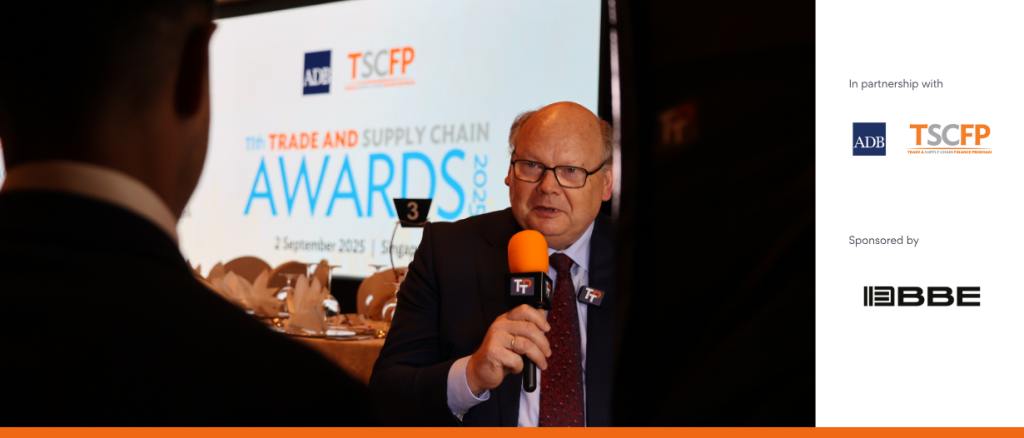
At the Asian Development Bank’s Trade & Supply Chain Finance Program (TSCFP) Awards in Singapore, Trade Treasury Payments spoke with Victor Van Der Kwast, CEO and Managing Director of Byblos Bank Europe, about the bank’s role in mobilising trade finance across both developed and developing markets.

At the International Trade and Forfaiting Association’s (ITFA) 51st Annual Conference in Singapore, Trade Treasury Payments (TTP) spoke with Surath Sengupta, Global Head of Transaction Banking Products at Lloyds Bank, about pilots, digital adoption, and the role of artificial intelligence in trade finance.

For centuries, merchants have relied on bills of lading and other trade documents whose value rests on the goods they represent and the enforceability of the rights they embody. As these instruments move from paper to digital form, attention has turned to whether these electronic trade documents are at risk in jurisdictions that have not adopted digitally enabling legislation like the UNCITRAL Model Law on Electronic Transferable Records (MLETR).

Global trade has shown resilience in 2025 despite growing challenges from tariff escalation and policy uncertainty, according to the World Trade Organisation’s latest “Global Trade Outlook and Statistics Update: October 2025” released on 7th October.
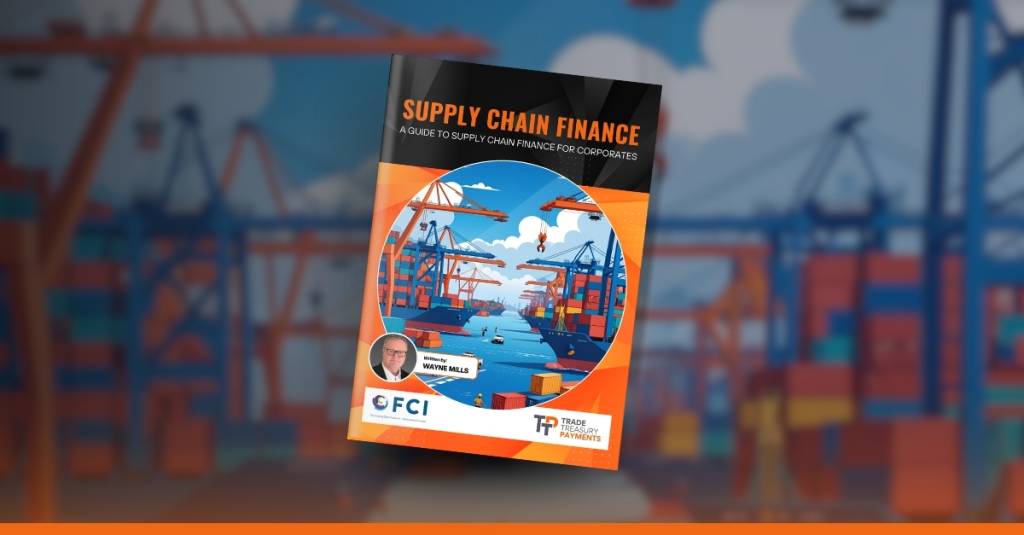
Corporates facing tighter liquidity, volatile markets, and fragile supplier networks are turning to supply chain finance (SCF) as a critical tool for resilience, yet many still lack a clear understanding of how it works. To bridge this gap, Trade Treasury Payments (TTP) and FCI have released ‘Supply Chain Finance Guide for Corporates’, a practical handbook designed to help businesses navigate the complexities of SCF and embed it into their broader financial and procurement strategies.

When we talk about lifting nations out of poverty or accelerating development, we often look to grand infrastructure or breakthrough technology. Yet in the current world of open-account trade, there is an engine with the power to widen access to liquidity and strengthen real economies – supply chain finance (SCF).