 English



First Brands: What the headlines miss – And what Supply Chain Finance (Payables) really means

 Alan Koenigsberg
Jul 20, 2025
Alan Koenigsberg
Jul 20, 2025
A $560 billion market built on a century-old loophole could be heading for a reckoning
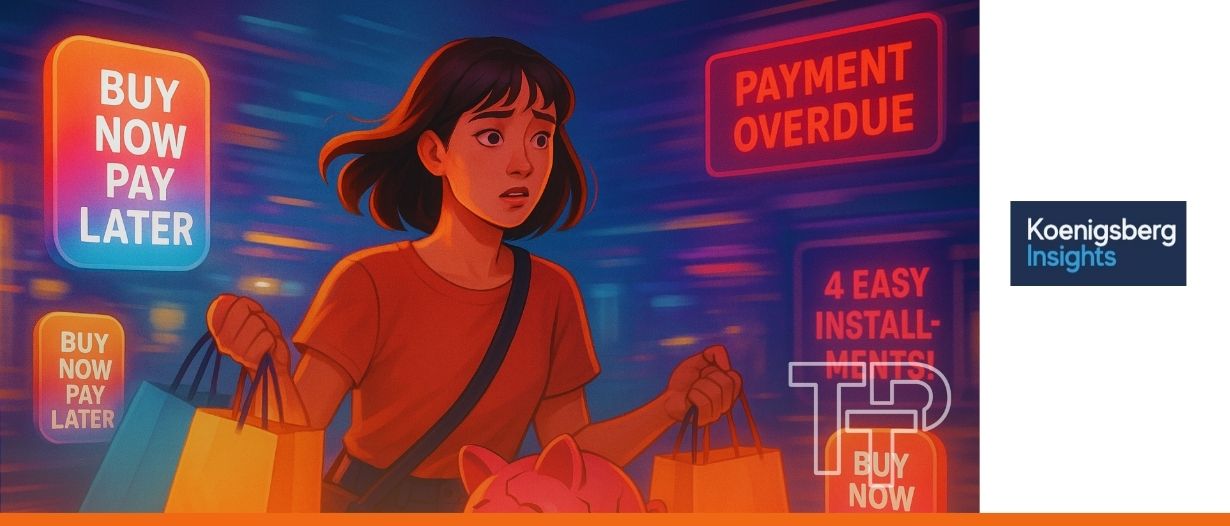
Meet Lysa. She represents a typical 24-year-old professional who has sworn off credit cards after watching a family member struggle with debt. Lysa was determined to be smart about money, but instead, she was lured in by the sleek, seemingly harmless world of Buy Now, Pay Later (BNPL), splitting her $200 sneaker purchase into four easy payments, her $80 skincare routine into bite-sized chunks, and even her $1,200 laptop for work.
When she started using BNPL for her weekly grocery run, red flags should have been obvious. She reassured herself that it was just a temporary situation. Her rent had gone up, and she needed to buy time until her next paycheck. What began as a $75 grocery split payment soon became a regular habit.
What Lysa didn’t realise was that she had quietly accumulated $3,400 in BNPL debt across five different platforms. None of these loans appeared on her credit report. None required traditional underwriting. And when she missed a payment on her laptop instalment, the effects were swift and brutal.
While Lysa’s character is fictional, the story is not. These scenarios are all too real for an increasing number of people. They’re part of a generation that has embraced what appears to be a financial innovation but may actually be part of a ticking time bomb built on a regulatory loophole from a different era – one that’s now threatening to reshape American consumer debt in ways we’re only beginning to understand.
The numbers are staggering. The global BNPL payment market is expected to grow by 13.7% on an annual basis to reach US$560.1 billion in 2025, with BNPL purchase volume expected to total $122.3 billion in 2025, up 12.2% year-over-year in the U.S. alone. What started as a niche service has exploded into a parallel credit system that operates largely outside traditional banking regulations.
Nearly 30% of U.S. consumers have used “Buy Now, Pay Later” loans, with Gen Z leading the charge. But here’s where the story gets concerning: 25% of BNPL users are now funding grocery purchases with these loans, up from just 14% in 2024, a stark indicator of financial stress that has economists worried. Among Gen Z users, one-third admit to using BNPL to afford groceries, making it the fourth most common use for these loans among the youngest consumers.
The late payment crisis is accelerating alongside this trend. Forty-one per cent of BNPL users made a late payment in the past year, up from 34% the year prior. When people start financing basic necessities like food, it signals a fundamental shift from convenience purchasing to survival financing.
The appeal is undeniable. Unlike traditional credit cards, BNPL promises instant gratification without the psychological weight of accumulating interest. The user experience is frictionless. A few taps on a smartphone, and that expensive item is yours. No credit check, no annual fees, no complicated terms and conditions to decipher.
But this convenience masks a fundamental problem: the industry has grown explosively by exploiting what experts call “the rule of four”, a regulatory blind spot (for purchases involving four or fewer instalments and requiring no finance fees) that’s about to be tested like never before.
The modern BNPL industry exists because of an exemption buried in Regulation Z, part of the Truth in Lending Act. Written decades ago, for a different financial landscape, the regulation exempts credit arrangements from disclosure requirements if they involve the previously mentioned rule of four.
This seemingly innocent provision has allowed companies like Klarna, Afterpay, and Affirm to build billion-dollar businesses without the consumer protections that govern traditional credit. BNPL lenders generate 13.4% of their revenue from consumer fees and 6.9% from late fees. While this statistic is from 2021 and a current detailed snapshot could not be updated, I would suggest as these businesses continue to scale, with most of the revenue coming from merchants, the consumer fee lines should be watched carefully by the industry and its regulators. Surely this business model could not sustain if it depends on a steady stream of missed payments while avoiding the regulatory scrutiny that would come with traditional lending.
The result is a shadow credit system where consumers can accumulate debt across multiple platforms without any central monitoring. Unlike credit cards, these loans don’t appear on credit reports unless they are defaulted on. There’s no comprehensive view of a consumer’s total BNPL exposure, no standardised affordability checks, and no consistent consumer protections.
Consumers who use BNPL tend to have a riskier credit profile: They are typically younger and less educated, with higher debt burdens and lower credit scores.
With Gen Z continually asserted as the highest user with the deepest penetration, the generational impact alone could be stark.
The cracks are already showing. BNPL borrowers defaulting on 2% of their loans, compared to 10% for credit cards, might seem reassuring, but experts argue that this comparison is misleading. BNPL loans are typically much smaller and shorter-term than credit card debt, and many defaults may be going unreported due to the fragmented nature of the industry.
More concerning is the demographic concentration of risk. As of fall 2023, 14% of adults had used BNPL in the prior 12 months, up from 12% in 2022 and 10 percent in 2021, with adults under age 60, adults without a bachelor’s degree, Black and Hispanic adults, and women more likely to use BNPL, precisely the demographics most vulnerable to economic shocks.
The psychology behind this shift is telling. Managing cash flow (36%) is the chief reason people turn to BNPL, followed by making larger purchases more affordable (28%). But when cash flow management extends to basic necessities, it suggests underlying financial fragility rather than smart money management. The business model itself is showing strain. Apple, which entered the BNPL market with great fanfare, quietly shuttered its Apple Pay Later service in 2024, less than a year after launch. Klarna’s valuation was at about 14.6 billion U.S. dollars in October 2024, a valuation significantly lower than the 45.6 billion observed in 2021, as rising interest rates and regulatory pressure took their toll.
Several factors are converging to create what could be a perfect storm for the BNPL industry:
Rising interest rates: As the cost of capital increases, BNPL providers are squeezed between maintaining their interest-free promise to consumers and the reality of funding costs. This pressure is forcing many to rely more heavily on late fees and merchant fees, potentially creating perverse incentives.
Regulatory scrutiny: The Consumer Financial Protection Bureau has put the industry on notice, with new regulations likely to emerge in 2025. European regulators are already tightening oversight, and the U.S. appears poised to follow suit.
Economic uncertainty: As economic headwinds build, the younger consumers who drive BNPL growth are likely to face employment challenges and income volatility, precisely the conditions that could trigger a wave of defaults.
Market saturation: Buy Now, Pay Later global market value tripled between 2020 and 2021 and it’s been estimated that global loan volume could reach $1 trillion by 2025. But this explosive growth may be unsustainable. As the market matures, competition intensifies, and profit margins become increasingly narrow.
The risks aren’t confined to consumers and BNPL providers. Merchants who offer these services often don’t fully understand the risk they’re taking on. In many BNPL models, merchants share the credit risk either directly or through chargebacks and disputes. Many merchants assume the Credit and fraud risks are transferred from themselves to the BNPL platform.” Not understanding the risks can be a flaw to the model itself and reflects a common merchant assumption that BNPL providers fully absorb risk. The maths is compelling on the surface. BNPL can boost conversion rates by 20% and increase average order values 87%. But when defaults spike, merchants can find themselves on the hook for losses they never anticipated.
Despite the risks, the BNPL industry isn’t necessarily doomed. The core value proposition – giving consumers more control over their cash flow – addresses real pain points in the traditional credit system. The question is whether the industry can mature responsibly before the current model implodes.
Several developments could determine the industry’s fate:
Regulatory evolution: New rules requiring credit reporting, affordability checks, and standardised disclosures could legitimise the industry while protecting consumers. The challenge is implementing these changes without killing innovation.
Technology solutions: Advanced analytics and machine learning could help providers better assess risk across multiple platforms, potentially solving the “invisible debt” problem that currently plagues the industry.
Partnership models: Rather than competing with traditional banking, BNPL providers might find success by partnering with banks and leveraging existing credit infrastructure.
Product innovation: Moving beyond simple instalment plans to more sophisticated credit products that offer genuine value to consumers while maintaining responsible lending practices.
The BNPL industry stands at a crossroads. The global BNPL market experienced robust growth during 2021-2024, achieving a CAGR of 21.7%, but this growth trajectory may not be sustainable under current operating models.
The next 18 months will be crucial. As regulatory frameworks tighten, economic conditions potentially worsen, and the industry faces its first real stress test, we’ll discover whether BNPL represents a genuine financial innovation or a dangerous experiment with consumer credit.
For consumers like Lysa, the wake-up call has already arrived. Missing multiple payments can result in a significant decline in credit scores when BNPL debts are finally reported. Buy now, pay later” can easily turn into buy now, pay forever”
The question facing policymakers, industry leaders, and consumers/small businesses is whether we can course-correct before this $560 billion market becomes a $560 billion problem. The answer may not only determine the future of BNPL but also the broader landscape of consumer credit for a generation.
The next chapter of the BNPL story is being written right now – and the ending is far from certain. I believe this industry can come together for the good of all participants and course correct. Time will tell the whole story…
This article is based on publicly available industry data and expert analysis. The consumer story presented is a composite narrative, based on real trends and experiences reported in industry surveys and research. Although individual names and specific details have been anonymised to protect privacy, common patterns identified in the data are illustrated.

Oct 17, 2025

Oct 16, 2025


Oct 16, 2025

Oct 16, 2025


Oct 15, 2025


Trade Treasury Payments is the trading name of Trade & Transaction Finance Media Services Ltd (company number: 16228111), incorporated in England and Wales, at 34-35 Clarges St, London W1J 7EJ. TTP is registered as a Data Controller under the ICO: ZB882947. VAT Number: 485 4500 78.
© 2025 Trade Treasury Payments. All Rights Reserved.