 English



First Brands: What the headlines miss – And what Supply Chain Finance (Payables) really means

 Devanshee Dave
Oct 01, 2025
Devanshee Dave
Oct 01, 2025
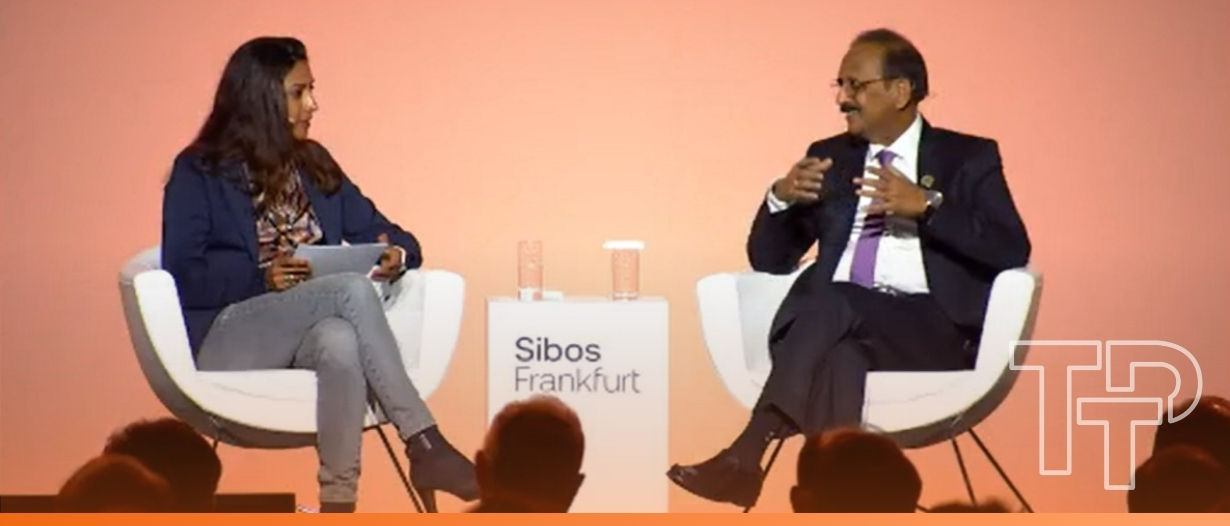
In a wide-ranging conversation at Sibos 2025 that touched on everything from digital currencies to cybersecurity threats, State Bank of India (SBI) Chairperson Challa Sreenivasulu Setty offered insights into how India’s largest bank is navigating the rapidly evolving financial technology landscape while maintaining customer trust at its core in the session “View from the Top” in conversation with Megha Kansal of McKinsey & Company.
The discussion revealed a carefully calibrated approach to innovation that balances technological advancement with traditional banking values, a philosophy that has sustained the 220-year-old SBI through numerous transformations. The conversation also explores how India has transitioned from a “cash is king” mindset to a country where digital transactions can occur in a matter of seconds via the Unified Payments Interface (UPI), and Know Your Customer (KYC) verification can be completed in just ten minutes.
When questioned about the adoption of Central Bank Digital Currencies (CBDCs) and stablecoins, Setty highlighted India’s deliberate approach to these developments. “We haven’t heard stablecoins in India, crypto still is a challenge for us,” he noted, while acknowledging significant global developments in state-backed digital currencies.
Setty emphasised that positioning would be critical for any alternative currency system in India. “Any of these alternate currencies, if they’re positioned as a payment mechanism, India will not really adopt them, because we have very strong payment systems in India now, UPI for instance,” he explained.
He suggested that the more viable pathway for such innovations in India would be as asset categories rather than payment mechanisms. This demonstrates India’s successful development of domestic payment rails, which already serve the market effectively.
On the critical subject of cybersecurity, Setty offered a comprehensive view of India’s collaborative approach. “If anything really keeps us awake at night is cybersecurity-related issues,” he acknowledged, before detailing the multi-stakeholder coordination model that has become central to India’s defence strategy.
“This cybersecurity, or cyber protection of the financial IT infrastructure, is not necessarily the job of the banks or the financial institutions or even customer protection for that matter. All the players have to work in coordination.” This includes banks as well as telecom companies.
Setty identified telecom companies as the weakest link in the chain, but noted the remarkable progress in coordination between “government agencies, telecom companies, regulators, and the regulated entities like banks.”
This collaborative approach has elevated institutions like SBI to the status of “nationally important infrastructure,” bringing enhanced vigilance and 24/7 threat information sharing.
“The experiences of one institution is shared with others,” Setty stated, highlighting how telecom providers have become “the widest users of AI models” for cybersecurity, with many banks partnering to leverage these capabilities.
However, challenges remain. This includes i) a lack of widespread cyber awareness among customers and employees ii) effective information exchange systems iii) the global shortage of cyber professionals.
A key development in addressing these challenges is India’s forthcoming Digital Payment Intelligence Platform, a bank-owned collaborative initiative similar to the National Payment Corporation of India (NPCI) that will collect, analyse, and share intelligence patterns with member banks.
When discussing India’s globally recognised digital payment infrastructure, Setty identified inclusivity as its defining characteristic. “One of the critical, very outstanding elements of this building of the digital public infrastructure in India is inclusivity,” he emphasised, noting the focus on making systems both accessible and affordable.
The results have been transformative, with 1.3 billion Indians now having biometric data available through Aadhaar, enabling bank account opening in just 10 minutes, a process that takes a week in some developed economies.
This infrastructure has brought approximately 600 million previously underserved people into the banking system through zero-balance accounts, with SBI alone opening 155 million such accounts.
India’s payment systems have completely revolutionised service accessibility in rural and semi-urban areas, with UPI now expanding to facilitate small-value digital loans. The result, according to Setty, is that “India has already leapfrogged in the domestic payments when compared to other countries,” reaching the highest maturity level alongside China.
For developed markets with already high banking penetration, Setty suggested the primary barrier remains cost. “Western countries have not invested heavily into their public payment infrastructure. Payments still seem to be a money-making mechanism,” he observed, adding that “unless we bring down the cost to the ultimate consumer, the inclusion will not happen.”
India’s willingness to share its UPI technology, already being rolled out in eight to nine countries, offers a potential solution. “Instead of reinventing the wheel, we can simply adopt the UPI mechanism in many countries,” Setty proposed.
Looking specifically at SBI’s future direction, Setty described an institution that has consistently reinvented itself while managing extraordinary scale, a 23% market share in deposits, nearly 20% in loans, and a balance sheet that doubles every six years.
The bank’s philosophy combines “empathy as the heart of customer-centric approach” with the adoption of technology at scale. While continuing to invest in emerging technologies like AI, SBI remains focused on delivering an omnichannel experience through initiatives such as its YONO mobile application.
Setty concluded with what he sees as the two fundamental elements for any financial institution’s success: “One is trust, and trust is fundamental bedrock of any financial institution,” he stated, adding that “trust is not a fixed deposit. It is like a savings deposit or checking account. We can always draw your trust away.”
The second element is empathy, which must not be lost in the digital transformation: “While we become more and more digital, we should not lose sight that digitalisation should not lead to an impersonal approach towards our customers,” said Setty. “Trust, empathy, combined with intuitive digital technologies, is going to be the way forward.”

Oct 17, 2025

Oct 16, 2025


Oct 16, 2025

Oct 16, 2025


Oct 15, 2025


Trade Treasury Payments is the trading name of Trade & Transaction Finance Media Services Ltd (company number: 16228111), incorporated in England and Wales, at 34-35 Clarges St, London W1J 7EJ. TTP is registered as a Data Controller under the ICO: ZB882947. VAT Number: 485 4500 78.
© 2025 Trade Treasury Payments. All Rights Reserved.