 English



First Brands: What the headlines miss – And what Supply Chain Finance (Payables) really means

 Alexander Malaket
 Craig Weeks
Sep 17, 2025
Craig Weeks
Sep 17, 2025
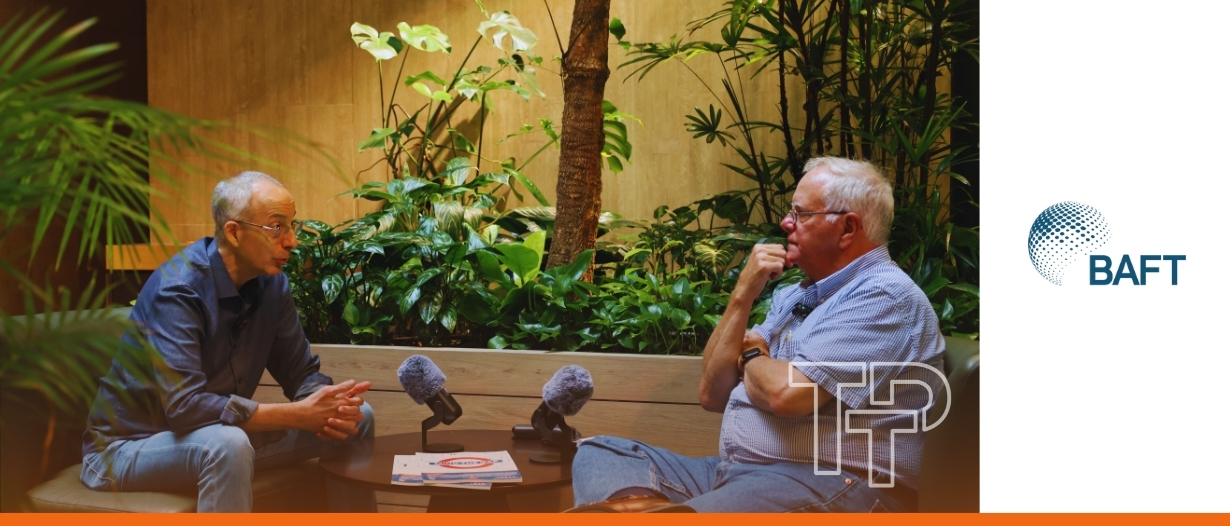
Ahead of a flurry of trade events taking place in Singapore (including ADB, GTR, BAFT, and ITFA events), Trade Treasury Payments (TTP) hosted a fireside chat with Alexander Malaket, President of OPUS Advisory Services International and founding partner of PRISM Global Partners, and Craig Weeks, Senior Vice President for Trade at BAFT.
The conversation focused on the issues rising in importance for the industry, and those that have slipped somewhat from the spotlight.
Alexander Malaket (AM): Hello, everyone. We thought a fireside chat format would be a good way to highlight topics that are particularly relevant this year – the “two up and two down”: two themes rising in importance, and two that may be less in focus compared to previous years. Craig, this was your idea, so thank you for shaping the discussion. Would you like to take us through it?
Craig Weeks (CW): From a trade finance perspective, the two topics that are very much “up” this year are tariffs and digitalisation.
Tariffs would not have even been on the agenda a year ago, but now they are all-consuming. That will be the number one topic this week. Secondly, digitalisation (and all of the issues that flow from it) is finally gaining traction. There are inflexion points that need to be managed carefully, but it is very much front of mind.
AM: I agree. It’s striking that tariffs, which were nowhere on the radar a year ago, have become so disruptive. On digitalisation, we’re clearly at a pivotal stage.
CW: On the down side, I see less focus on sustainability. Not that it had disappeared. But it is not receiving the same attention as last year. With sustainability, the urgency is still there but it has slipped a little.
AM: I might substitute blockchain for Basel III. A year or two ago, it dominated the conversation, but now it’s less of a “shiny new thing” and more of a useful architecture in the background. Tokenisation and CBDCs, however, remain relevant.
On sustainability, I see the pendulum finding equilibrium. We ignored ESG issues for too long, then the pendulum swung strongly in the other direction, and now it’s settling into balance. It’s still very relevant (we face existential challenges), but the conversation has matured.
On Basel, I agree. One initiative worth highlighting is the Trade Register, initially funded by the Asian Development Bank (ADB) and now housed at the International Chamber of Commerce (ICC). For more than a decade, banks have contributed data on default and loss rates, which has been useful from an advocacy perspective. But there’s an opportunity to expand the scope, include more banks (particularly in emerging markets) and make the data more widely available. That could make it an even more powerful tool.
AM: Let’s turn to tariffs. Craig, why don’t you start us off?
CW: It has been a very eventful six months. At BAFT, we realised that direct advocacy to the US government was unlikely to be effective. Instead, we launched a bi-weekly discussion group where members from around the world could share what was happening, how they were reacting, and what they anticipated in the weeks ahead.
This shift has been challenging. We’re used to developing strategies and executing against them. Now, banks are asking very tactical questions: What do we do about tariff evasion, avoidance, and tariff-related crime? How do we instruct our staff, compliance teams, and document checkers?
For supply chain finance providers, there may even be opportunities to separate the funding of the invoice value from the tariff amount – two different funding streams. So there is innovation, but overall, we’re managing high uncertainty, which nobody enjoys.
AM: And the target seems to move daily. It’s like changing tyres on a moving car. One worrying trend is banks being pushed into acting as quasi-police for tariff enforcement, much like in financial crime compliance and AML. The question is what is the proper role of banks, and how much expertise can realistically be expected from them?
CW: Exactly. Is it fair to ask a letter of credit officer to know whether an importer has hidden tariff costs within freight charges? Probably not. If governments want banks to take on that role, regulators need to provide clear training and guidance.
AM: Then there’s the bigger question: do tariffs really collect revenue, or do they simply pass costs down to the end consumer? Even regulators struggle with this because the reality is so complex.
AM: Let’s talk about the financing implications.
CW: Unfortunately, SMEs and smaller banks are the ones who suffer most. Tariffs lead to higher-value transactions that require financing for longer periods. That reduces available credit and makes it more expensive. Banks then apply stricter risk evaluations, further constraining access to credit.
For SMEs, this can be devastating. Imagine a small importer with a container of goods suddenly facing a 30% tariff. They can’t absorb that cost, nor can they easily pass it on. Some even abandon shipments or look for discrepancies in documents to avoid payment. It creates unhealthy behaviour in the system.
Even large corporates are reaching breaking points. Some US carmakers and consumer goods companies initially absorbed the costs, but recently several have announced they are now passing tariffs directly onto consumers. We will start to see that in prices.
AM: And tariffs also reshape supply chains. Companies are making sourcing decisions based on tariff avoidance, adding yet another layer of disruption to already strained supply chains.
CW: Yes, and it can backfire. Exporters also suffer because they rely on imports for their own production. What was supposed to protect exporters can end up harming them.
AM: Exactly. Trade deficits, imports, and exports are all often misunderstood. Imports can improve standards of living and productivity, just as exports drive growth. Healthy trade itself has long been seen as a source of global security. Countries that trade with each other are less likely to go to war. That’s an important point to remember.
CW: I agree. And this is where organisations like BAFT can play a constructive role. We provide a global perspective and a level playing field for members, gathering insights from across jurisdictions and advocating accordingly.
AM: Well said. Craig, thank you as always. It’s a pleasure to have this conversation with you, no matter where we are.

Oct 17, 2025

Oct 16, 2025

Oct 16, 2025

Oct 16, 2025


Oct 15, 2025

Trade Treasury Payments is the trading name of Trade & Transaction Finance Media Services Ltd (company number: 16228111), incorporated in England and Wales, at 34-35 Clarges St, London W1J 7EJ. TTP is registered as a Data Controller under the ICO: ZB882947. VAT Number: 485 4500 78.
© 2025 Trade Treasury Payments. All Rights Reserved.