 English



First Brands: What the headlines miss – And what Supply Chain Finance (Payables) really means

 Matthew Wilson
Aug 13, 2025
Matthew Wilson
Aug 13, 2025
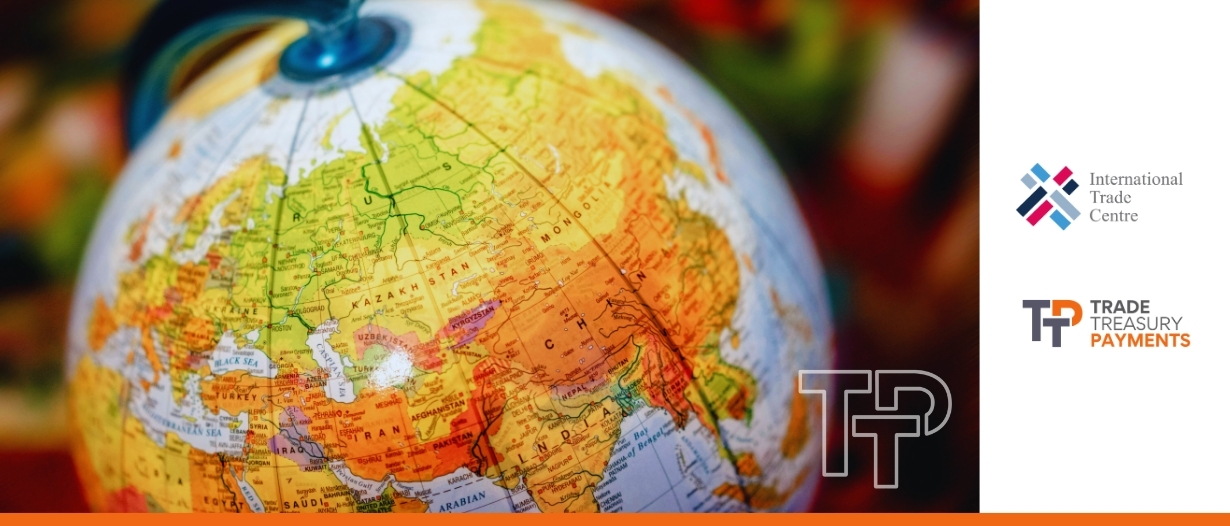
Despite their small size and remote locations, small island developing states (SIDS) are far from powerless on the global stage. By prioritising trade, sustainability, and the inclusion of small businesses in the global marketplace, these nations are demonstrating that their voices can drive meaningful change.
As the trade industry, and the world more broadly, grapples with the big questions of sustainability and the role of international institutions, these small nations are using their voices and unique perspectives to advocate for change in a way that shows how they are far more than just passive victims of global forces.
While at the International Trade Centre’s (ITC) SME Ministerial in Johanessburg, South Africa, Trade Treasury Payments (TTP) spoke with Matthew Wilson, the Ambassador of Barbados to the WTO, the United Nations, and other international organisations in Geneva, to learn more about the perspective of small island states and their place in large international institutions.
For a variety of factors, the realities of life for small island developing states can be stark, with many, like Barbados, facing vulnerabilities that larger countries rarely have to contend with. For example, a single natural disaster, such as a hurricane, can wipe out an entire island’s GDP in a matter of hours.
Add to that their difficulties with influencing international policies due to their smaller size. Matthew Wilson said, “In many respects, we are policy takers. We’re not policymakers… Sometimes we almost feel like we are in the passenger seat rather than in the driver’s seat, just waiting to see what the policies and decisions of the larger countries will be.”
Alongside these challenges come an array of opportunities for small island states, many of which are beginning to leverage their ocean space and the emerging blue and green economy to their advantage. This brings new ways to invest in sustainable practices that balance economic growth with environmental responsibility.
Barbados, for instance, has been a strong proponent for creating and using disaster-related clauses in loans. This type of clause allows countries to pause loan repayments in the aftermath of climate-related disasters, letting the impacted communities focus on the more pressing issues at that moment without needing to fret about a loan repayment. This simple yet powerful policy has provided comfort to both the affected countries and creditors as well.
Wilson said, “If the aim of development aid is to build sustainable countries and communities, you have to look at certain elements like this disaster risk clause. It’s just one of many things that we’ve been able to do as a small island state, but we need larger countries to listen to us. We need larger countries to take our priorities on board and to give us space at the negotiating table to make sure that our views and our priorities are heard.”
Small island states, though often overlooked, are beginning to show that they can turn their vulnerabilities into strengths by pushing for policies that reflect their unique needs and challenges.
The World Trade Organization (WTO), an international organisation that regulates global trade and facilitates trade agreements between countries, has received considerable criticism since the Doha round of negotiations with critics pointing to its inability to advance further multilateral agreements as a sign that the organisation is losing its influence on the global stage. However, this perception fails to account for how the role the WTO plays has changed as the dynamics of international trade have shifted.
Inside the WTO, much of the discussion is now focused on the contemporary issues that matter most. Wilson said, “The WTO is discussing issues of trade and gender. They’re discussing issues of plastics pollution and sustainability issues and fossil fuel subsidies. I think sometimes the outside world does not realise the richness of the discussions of the WTO.”
Anyone who understands how the organisation functions today cannot say that the WTO is just about finalising trade deals between countries; now it is a space where the future of global trade is being debated, particularly as contemporary issues such as trade and gender, sustainability, and the role of small businesses take centre stage.
The WTO’s focus on small businesses and trade-related sustainability issues is just one example of how the organisation is modernising its approach, making it clear that it is far from irrelevant in the face of global challenges.
Any discussion of a small island state’s economy would not be complete without a mention of the importance of small businesses. Small businesses are often the heart of an economy, particularly in developing countries, where they make up the majority of income generation and job creation. In many countries, small businesses are responsible for 80 to 90 per cent of jobs and addressing youth unemployment in regions like Africa and the Caribbean hinges on the success of these enterprises.
Despite their significance, small and medium-sized enterprises (SMEs) are rarely the focus of trade policy discussions, yet, in order for them to thrive on the global stage, they need both policies that support their growth and access to financing opportunities at reasonable prices.
“If you look at the [trade facilitation] surveys that have been done over the past decade, #1 and #2 on the list of barriers for SMEs are either access to finance or access to knowledge and market information. We have got to be able to address these issues now. #3 is always a lack of confidence, which means we also have to do more to build the confidence of small entrepreneurs.”
The WTO and other international organisations have some initiatives in place to help with these. For example, the WTO’s MSME working group is a forum to help ensure that small businesses have a voice in trade policy by creating a space for them to share their priorities. “We’ve been able to discuss everything from informality to good regulatory practice to access to finance for women-owned enterprises,” says Wilson.
The WTO’s work on creating resources such as the Trade for MSMEs website and educational game is another example of how the organisation is empowering small businesses.
Wilson added, “It’s a bit of a choose-your-adventure game that entrepreneurs can use to plan their export growth. It’s a really fun way to chart your export journey and … figure out how to get goods and services from A to B.”
Sustainability, in its many meanings, has become an increasingly important issue for the planet and emerging economies the world over; however, there is a fine balance to strike between achieving environmental goals and supporting economic growth. Wilson argues that policies like the carbon border adjustment mechanism (CBAM) could present significant challenges for small businesses, particularly those in developing countries.
“The question is how do we protect people, planet health, and the environment, but also make sure small businesses can stay afloat and get their goods into markets?” Wilson asks.
Take fishing as an example. Given their geography, fisheries tend to be a key economic sector for many small island states. The WTO’s work on fisheries subsidies provides one practical case study of how trade policies can be adapted to protect vulnerable industries while balancing environmental and economic concerns.
“This is the first time that there’s been a direct environmental sustainability element to a WTO multilateral agreement,” Wilson says. “And this is all about addressing issues like illegal and IUU [illegal, unreported, and unregulated] fishing, which is something that plagues many small developing countries. We do not have the ability to police our own waters, and this means that some larger fleets often come into our waters using techniques that are very dangerous to our reefs and to our ecosystems, and they take away our fish.”
However, negotiating fishing subsidies has proven challenging as some large fishing nations are still reluctant to accept limits on their subsidies, which would distort competition and harm developing nations’ fishing industries.
—
Despite the headwinds, small island states are showing that they will not stand by and be passive participants in global trade. These countries are finding ways to assert their influence in trade, pushing for policies that support their unique needs while also contributing their unique perspectives to global conversations about sustainability and small business support.
For small businesses, particularly in developing nations, the road to success in global trade requires both the right policies, recognition of their value in the global economy, and the tools to help them compete. The growing focus on SMEs in international trade is a positive step toward creating a more inclusive and sustainable global trade system.

Oct 17, 2025

Oct 16, 2025


Oct 16, 2025

Oct 16, 2025


Oct 15, 2025

Trade Treasury Payments is the trading name of Trade & Transaction Finance Media Services Ltd (company number: 16228111), incorporated in England and Wales, at 34-35 Clarges St, London W1J 7EJ. TTP is registered as a Data Controller under the ICO: ZB882947. VAT Number: 485 4500 78.
© 2025 Trade Treasury Payments. All Rights Reserved.