 English



First Brands: What the headlines miss – And what Supply Chain Finance (Payables) really means

 Carter Hoffman
Aug 20, 2025
Carter Hoffman
Aug 20, 2025
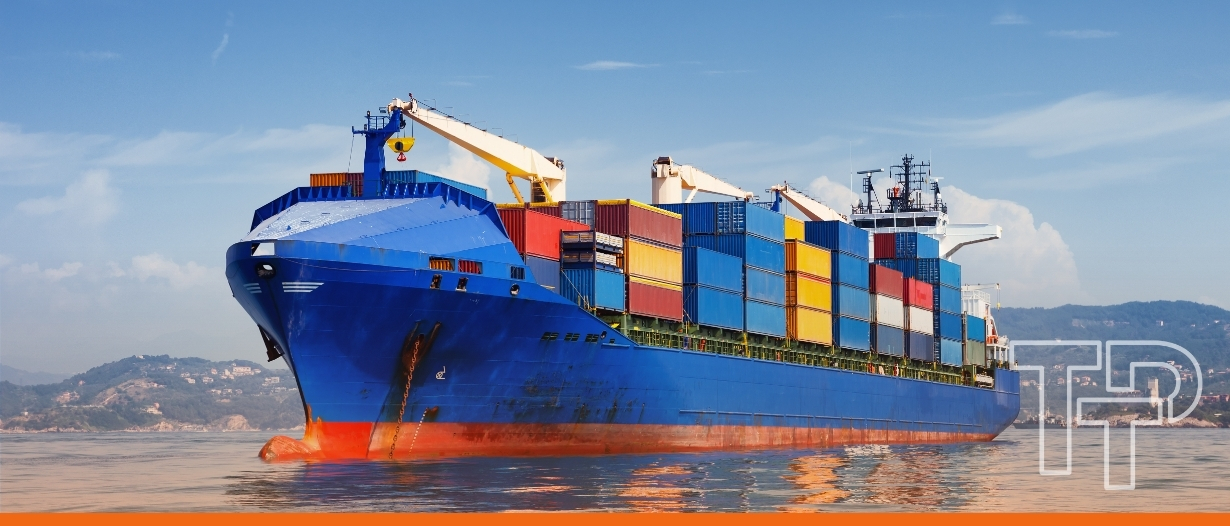
Norton Rose Fulbright, a law firm, has advised Ocean Network Express (ONE), a shipping company, on a structured ship financing transaction involving both the Japan Bank for International Cooperation (JBIC) and Nippon Export and Investment Insurance (NEXI). This is the first time these two public institutions have taken part in a Japanese Operating Lease with Call Option (JOLCO) for container vessels.
The financing will support the construction of four 13,700 TEU container ships (which would be classified in the upper mid-size range of the world’s container fleet). These vessels are being built by Nihon Shipyard Co., Ltd. and Imabari Shipbuilding Co., Ltd., two major Japanese shipbuilders. After completion, the ships will be leased to ONE, a Singapore-based container carrier jointly owned by NYK Line, MOL, and “K” Line.
The deal was structured through four special-purpose companies set up by Financial Partners Group (FPG). JBIC provided part of the debt funding, while the rest came from BNP Paribas (Tokyo), HSBC (Tokyo), and Citibank (Tokyo). BNP Paribas also coordinated the export credit agency (ECA) aspects of the deal. NEXI is providing insurance for the portion of the loan covered by the commercial banks.
Each of the four ships is designed for future environmental upgrades as they can be converted to run on alternative fuels such as methanol or ammonia, and they are ready for installation of carbon capture systems. These features are intended to support the industry’s long-term shift toward low-emission shipping.
A Japanese Operating Lease with Call Option (JOLCO) is a financing method commonly used in Japan (especially in aviation).
In a JOLCO, a lessor (usually a special-purpose company backed by Japanese investors) buys the vessel and leases it to the shipping company. The shipping company makes regular lease payments and has the option to buy the vessel at the end of the lease. This gives the operator long-term access to the vessel with flexibility at the end of the contract.
For shipping companies, the JOLCO model offers more financial flexibility and can also lower the overall cost of capital. For investors in Japan, the structure is attractive because of local tax incentives. This combination has made JOLCO an increasingly popular choice for capital-heavy assets like ships.
The JOLCO mainly is mainly used in Japan because it relies on Japanese tax rules that give local investors special benefits when they lease assets like ships or planes. In addition, the investors, banks, and leasing companies that support JOLCO deals are all based in Japan, and the legal and financial systems are set up to support this model. Without these specific conditions, the structure wouldn’t be practical outside Japan.
Traditionally, in most cases, vessels have been financed using standard debt arrangements. A bank provides a loan, and the shipping company repays it over time, with the vessel used as security. This model gives the company full ownership of the ship from the start but requires a large upfront commitment.
Another common approach has been sale-and-leaseback. In this model, a shipping company sells a vessel to a financial institution and leases it back. This allows the company to raise cash while continuing to operate the ship. While sale-and-leaseback may seem similar to the JOLCO structure, the main difference is who owns the asset and how the financing is structured. In a sale-and-leaseback, the operator first buys the asset, then sells it to an investor or leasing company, and immediately leases it back. In a JOLCO, the operator never owns the asset. Instead, a Japanese investor buys it directly and leases it to the operator, usually through a special-purpose company.
Export credit agency (ECA) support remains a common feature in ship financing, especially for vessels built in countries like Japan, South Korea, or China. When involved, ECAs typically provide either direct loans to the borrower or guarantees that cover part of the loan issued by commercial banks. By lowering the credit risk for lenders, ECA participation makes it easier to secure financing on more favourable terms. This can include longer repayment periods, lower interest rates, or higher loan-to-value ratios. For shipowners, ECA-backed structures are particularly useful when ordering from shipyards in the ECA’s home country, as they align financing incentives with national export priorities.
The Norton Rose Fulbright team advising on the deal was led by Paul Coggins in Tokyo. He was supported by partner Sue Ann Gan and associate Sophie Polisena in Singapore, with tax input from London-based partner Matt Hodkin and associate Giulia Schwartz.
This transaction demonstrates how structured finance can be used to support vessel investments that meet both commercial and environmental objectives. By incorporating features such as future fuel conversion and carbon capture readiness, the financing aligns with industry efforts to prepare for stricter emissions regulations.
The participation of JBIC and NEXI within a JOLCO framework also shows how public institutions can enable capital solutions for energy-efficient shipping assets. This structure may offer a reference point for future transactions with similar technical and sustainability requirements.

Oct 17, 2025

Oct 16, 2025

Oct 16, 2025

Oct 16, 2025


Oct 15, 2025

Trade Treasury Payments is the trading name of Trade & Transaction Finance Media Services Ltd (company number: 16228111), incorporated in England and Wales, at 34-35 Clarges St, London W1J 7EJ. TTP is registered as a Data Controller under the ICO: ZB882947. VAT Number: 485 4500 78.
© 2025 Trade Treasury Payments. All Rights Reserved.