 English



First Brands: What the headlines miss – And what Supply Chain Finance (Payables) really means

 Deepesh Patel
Sep 12, 2025
Deepesh Patel
Sep 12, 2025
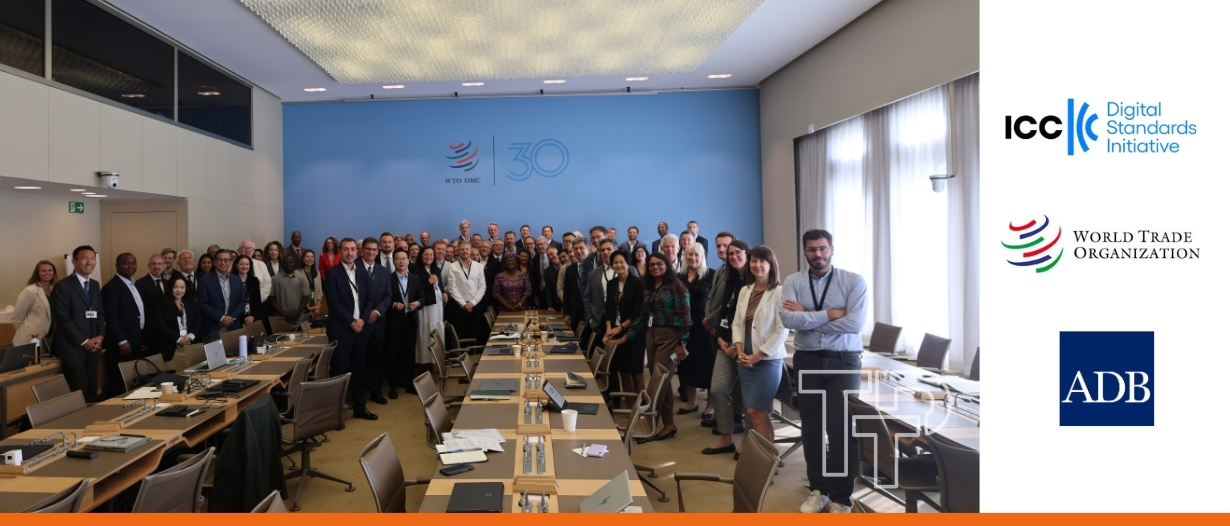
The ICC Digital Standards Initiative (ICC DSI), the World Trade Organisation (WTO), and the Asian Development Bank (ADB) convened the Digital Trade Transformation Forum in Geneva on 10th September, addressing the challenge of fragmented digital trade systems. The meeting at WTO headquarters marks a new phase in the strategic effort to advance interoperability in global trade documentation and data exchange.
The forum brought together participants from the ERP and IT infrastructure sectors. Technology providers Microsoft, Google, Amazon Web Services, and SAP participated alongside trade and finance entities, including the Digital Container Shipping Association, BIMCO, FIATA, International Port Community Systems Association, Swift, JP Morgan, and HSBC.

WTO Director-General Ngozi Okonjo-Iweala described trade digitalisation as “one of the most powerful tools we have to reduce costs, improve transparency and accountability, and build a trading system that works better for everyone – from multinational corporations to small entrepreneurs in developing economies.”
“Moving to cross-border paperless trade requires more than a supportive legal framework. It requires interoperability: data elements that make up trade documents need to be understood, exchanged, and usable across multiple systems, jurisdictions, and stakeholders”, she further added.
World Customs Organisation (WCO) Secretary General Ian Saunders highlighted additional benefits: “Digitalisation is not only about creating efficiency but also strengthening supply chain integrity. When processes are digital, transparent, and traceable, opportunities for corruption diminish.”
Despite progress in digitalisation efforts, technical compatibility issues still hinder the smooth exchange of standardised trade data across borders and systems.
Pamela Mar, Managing Director of the DSI, stated, “Progress towards a fully digitalised interoperable global trading system occurs mainly in small steps, even when the key stakeholders overwhelmingly agree on the objective.”
The consensus among participants indicated that including technology infrastructure providers in policy discussions represents a critical development, while acknowledging that both public and private sectors must address internal system limitations.

The forum concluded with participants aligning on specific action priorities. Philippe Varin, Chair of the ICC, reinforced that “digitalisation – with interoperability as a core guiding principle – is central to ICC’s mission to build a multilateral trade system fit for the future.”
Steven Beck, Head of Trade & Supply Chain Finance at the ADB, outlined the economic implications, stating that “The digitalisation of trade – moving documents seamlessly from exporters to shipping, ports, customs, logistics, and financiers – will be transformative. It will boost productivity, enable inclusive growth, and unlock development opportunities.”
The partnership among these international organisations shows the need for independent initiatives to shift towards coordinated efforts. The transition is important to deliver its full potential for expanding global commerce, creating employment, and driving economic development.
The substantive impact of the forum will be measured by actions taken by participants in subsequent months to convert dialogue into progress toward an interoperable digital global trade system.

Oct 17, 2025

Oct 16, 2025


Oct 16, 2025

Oct 16, 2025


Oct 15, 2025


Trade Treasury Payments is the trading name of Trade & Transaction Finance Media Services Ltd (company number: 16228111), incorporated in England and Wales, at 34-35 Clarges St, London W1J 7EJ. TTP is registered as a Data Controller under the ICO: ZB882947. VAT Number: 485 4500 78.
© 2025 Trade Treasury Payments. All Rights Reserved.