 English



First Brands: What the headlines miss – And what Supply Chain Finance (Payables) really means

 Devanshee Dave
Oct 01, 2025
Devanshee Dave
Oct 01, 2025
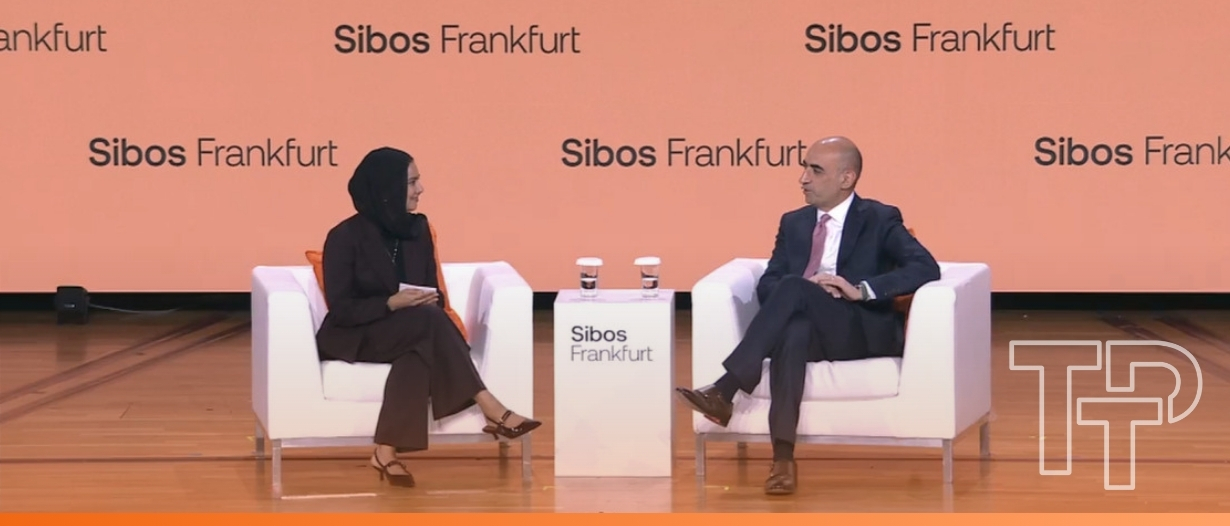
In the world of financial technology, few domains have experienced such a fundamental transformation as global payments. At Sibos 2025, Umar Farooq, Global Co-Head of J.P. Morgan Payments, offered insights into how the world’s largest payments business navigates this complex terrain during a wide-ranging conversation with Aisha Gani of Bloomberg News in the “Inside Leadership” session.
“When I came in, the space was still sort of very limited. It was more Treasury-focused. It was very sort of old infrastructure,” Farooq explained, contrasting this with today’s environment where payments have become nearly invisible to consumers through mobile devices and embedded payment experiences.
This transformation extends beyond consumer applications. J.P. Morgan Payments now processes approximately $10 trillion daily through nearly 60 million transactions, spanning everything from fixed transactions in Brazil to UPI in India, ACH in the US, and wires all over the world, including Indonesia and Japan. This scale recently reached a single-day peak of $15 trillion, “the highest amount of money ever any bank has ever moved in history,” according to Farooq.

Farooq describes that leading in today’s time requires a combination of curiosity and paranoia. Curiosity drives continuous learning about emerging technologies and regional innovations, while paranoia comes from awareness that competitors constantly analyse friction points in existing systems.
This self-disruption philosophy has guided J.P. Morgan Payments’ approach to innovation, where the focus remains on solving client problems while maintaining a long-term investment perspective.
“The investments we are making today, we are making it for the next generation. People will come in five years, 10 years, and sit in our seats and hopefully reap the rewards of what we’ve done,” Farooq said.
When asked about fintech competition, Farooq quoted, “many of them as frenemies.” Most prominent fintech companies are simultaneously clients, partners, and competitors of J.P. Morgan.
This complex ecosystem creates mutual learning opportunities, with established banks adopting innovations pioneered by fintech firms while providing them with essential infrastructure.
“If a fintech exists and becomes successful, it could be because they provided a user experience that, frankly, was dramatically better than a bank user experience,” Farooq stated.
This perspective has led to strategic partnerships that might surprise outside observers, including J.P. Morgan’s recent tie-up with buy-now-pay-later provider Affirm. Farooq explained the pragmatic rationale: “Whatever payment mechanisms do come up in the world, we will need to provide them to our clients, because it’s more about lower friction than, frankly, us saying we believe in this one thing or the other.”
He also stated that “If there is something to be disrupted, that we are the first disruptor of ourselves.”
Farooq, who previously led J.P. Morgan’s Onyx blockchain unit, stated that “most of crypto is still noise,” while acknowledging the emergence of certain digital assets with genuine utility.
“If you think about Bitcoin, I think there’s no doubt that Bitcoin is part of people’s investable assets realm, not for everyone, but a lot of people want to invest in Bitcoin,” he noted, also recognising Ethereum’s impact through EVM-based networks. However, beyond these examples, Farooq sees “thousands of other tokens, which are basically, many of them are just out there…so they can get someone to invest like 10 bucks in them, and then pocket the 10 bucks.”
Despite this scepticism toward speculative tokens, Farooq stressed the significant technological innovations emerging from the crypto ecosystem, including smart contracts, programmability, atomic settlement, and decentralised finance mechanisms, that traditional financial institutions can adapt and implement.
This approach has informed J.P. Morgan’s development of its blockchain-based infrastructure, initially known as JPM Coin and later rebranded as Onyx Digital Payments. Farooq explained the conceptual shift from centralised to decentralised ledgers: “If you really think about, like, what is your Deposit Account? It’s like a gigantic Excel spreadsheet, and blockchain is a decentralised system for maintaining that ledger.”
The growth in this area has been substantial, with transaction volumes increasing “more than an order of magnitude, year over year, for the last few years.” More recently, J.P. Morgan also launched JPMD on Base, a blockchain operated by Coinbase, showcasing its commitment to providing institutional clients with regulated deposit tokens that offer yield advantages over stablecoins.
Despite growing concerns about geopolitical fragmentation affecting global payment flows, Farooq indicated the bank has not yet observed significant disruptions. “We are not seeing any significant impact to cross-border flows so far,” he stated, suggesting that businesses typically adapt to changing tariff regimes once the parameters are established.
Regarding the U.S. dollar’s reserve currency status, Farooq expressed confidence in its continued dominance, stating he doesn’t “see much changing, because I’m not sure that there’s a lot of viable alternatives.”
Regional developments, however, paint a more nuanced picture. Emerging markets, such as India and Brazil, have leapfrogged developed economies in payment system innovation, implementing real-time infrastructure with near-zero costs.
“I’ve been particularly impressed by what India built,” he emphasised. On a maturity scale of one to five, Farooq placed India alongside China at the highest level (five). Meanwhile, established markets with robust legacy systems have experienced slower evolution toward real-time capabilities.
The bank is also observing significant growth in previously underdeveloped trade corridors, including those between Latin America and the Middle East, as well as between EMEA and Asia.
This has shaped J.P. Morgan Payments’ strategic priority of global expansion, with a particular focus on markets such as Saudi Arabia, where the bank will soon celebrate its 90-year presence, and the United Arab Emirates, where it recently established an entity in the Abu Dhabi Global Market.
When discussing how JPMorgan approaches market fluctuations, Farooq quoted, “Keep your eye on the climate, not the weather.” While interest rates may rise and fall, he dismisses them as merely “weather”, the bank’s payments business remains focused on long-term structural trends that will reshape the industry for decades to come.
Looking forward, Farooq emphasised the central role of technology in determining competitive outcomes across financial services. “The future of finance is…very bright, but people who win in it, whether it’s payments or otherwise, will need to be extremely well equipped when it comes to technology and operational excellence and resilience,” he said.
Farooq highlighted three areas of particular interest, which include biometrics, tokenisation, and artificial intelligence, which he believes “could be true game changers in how our business is managed and run.”
When asked about particularly impressive innovation centres, Farooq singled out India’s rapid transition “from a paper economy to a fully digitised, real-time economy” and China’s forward-looking payment ecosystems that showcase “the path of what future could look like.”
His advice for emerging leaders in the payment space circles back to his leadership philosophy: “The biggest advice I would have is, as for any space, is truly just curiosity. I think there’s no replacement for just learning all the time, for reading, for meeting people.”

Oct 17, 2025

Oct 16, 2025


Oct 16, 2025

Oct 16, 2025


Oct 15, 2025

Trade Treasury Payments is the trading name of Trade & Transaction Finance Media Services Ltd (company number: 16228111), incorporated in England and Wales, at 34-35 Clarges St, London W1J 7EJ. TTP is registered as a Data Controller under the ICO: ZB882947. VAT Number: 485 4500 78.
© 2025 Trade Treasury Payments. All Rights Reserved.