 English



First Brands: What the headlines miss – And what Supply Chain Finance (Payables) really means

 Devanshee Dave
Sep 29, 2025
Devanshee Dave
Sep 29, 2025
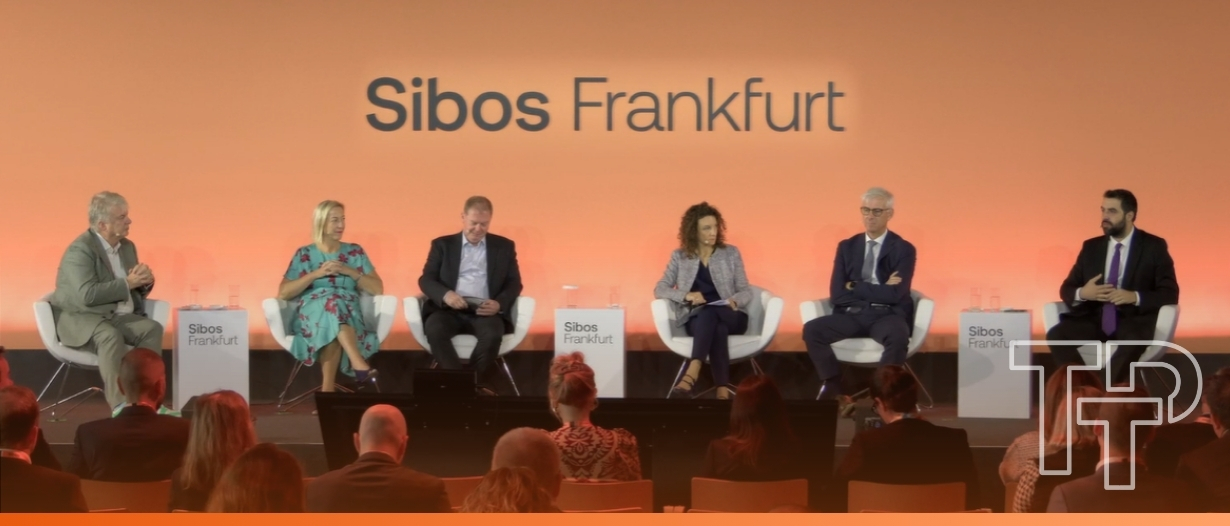
Industry leaders from major financial institutions shared diverging views on the future of settlement cycles during a panel discussion on “T+1 and Beyond: Building the Future of Global Markets” at Sibos 2025, challenging the assumption that faster settlement is always better and exploring how market infrastructure must evolve to meet changing demands.
The panel featured Andrew Douglas from the UK Accelerated Settlement Taskforce as moderator, with panellists Jane Masen (HSBC), Gareth Jones (Euroclear), Camille Papillard (BNP Paribas), Marc Bayle de Jessé (CLS Group), and Michalis Sotiropoulos (DTCC).
Jane Masen from HSBC provided context on the current state of the industry, stating that their clients are already operating at T+0 (same-day settlement). She viewed the industry’s direction positively, stating, “It is putting us in a position where we are having to invest more in technology. We are having to go on a journey that makes us more efficient, creates additional resilience, and makes interoperability smoother.”
Gareth Jones from Euroclear also quoted that “25% of the settlements in Europe are already T+0,” suggesting that the market has been gradually evolving rather than making a sudden shift. This statistic highlights that for many institutions, the future is already here, though implementation remains uneven across different market segments.
Jones emphasised that T+1 fundamentally addresses timing challenges. “T+1 is all about the timing of operational activities… that’s where a lot of the cost comes in, that people will have to invest in addressing timing issues.” This perspective frames settlement acceleration as primarily an operational efficiency challenge rather than a technological revolution.
He identified emerging priorities that may prove more significant. “The US market is consulting heavily about moving to 24-hour trading five days a week. I think NASDAQ has plans to start that next year,” he added. Similarly, “The ECB is consulting about lengthening T+2 timings and potentially operating on the weekend.”
These developments cover real-world problems exposed during recent crises, such as the Silicon Valley Bank insolvency, where “some of the challenges faced were about how to move collateral to raise liquidity in hours when infrastructure isn’t necessarily open, yet people are busy taking money out of banks on their apps.”
Michalis Sotiropoulos from DTCC also emphasised that, regardless of the ultimate destination, preparation must begin now. “Firms need to prepare for T+0, to invest for T+0 now, and whether they see T+1 as an intermediary step or not, it’s really up to the markets to decide.” He characterised T+1 as “a catalyst and critical to unlock these investments and also give firms the opportunity for the back office to get the investment and get the budget to do this change.”
Marc Bayle de Jessé from CLS Group quoted that “The idea that faster is always better is not obvious at all.” Drawing an analogy, he added that “If we go for lunch together, faster is not always better.”
He highlighted the practical limitations of scale, “In the FX market, we are settling values which are beyond the possibility to be processed in real time – 8 trillion US dollar movement of liquidity every day. You can’t process it in a pure RTGS context.”
These transactions serve essential economic functions. “They are creating liquidity. They are creating the market. They are creating the capacity to answer many challenges of the economic system.”
The panel explored not only what digital transformation might look like, but also how quickly it could realistically occur. When polled about the timeline for capital markets digitalisation, 60% of the audience expected it to happen within 5-10 years, 20% predicted it would take 10-20 years, and 20% believed it would occur within 5 years.

No one thought digitalisation would happen, indicating broad consensus about the direction, if not the pace, of change.
A key question here is whether custodians will have a place in a fully digitalised world. Papillard stated, “The answer is yes, but the role will evolve.”
She highlighted that two main themes affecting custodians are AI and digital assets. “We use AI in key areas, which include serving clients and getting data to them more quickly, making efficiencies through automation, and in risk management.” While AI might make some jobs redundant, Papillard noted it’s also creating new ones. “We have at BNP more than almost 1,000 AI analysts looking at different use cases,” she added.
Regarding digital assets, she emphasised that custodians will remain essential. “The primary role of a custodian is to bring safety and security, and you’ll always need someone to connect you in a safe way to those chains, especially as today it’s their check, making the link between the traditional systems and those new markets.”
Masen quoted, “When the ledgers went away in 1987, the jobs didn’t go away. As you build more technology and have more innovation, you have more opportunities to offer your client base more of what they want.”
She emphasised the continued importance of human interaction, stating that “Our clients want to speak to people. They want to engage with people. It’s our job to sometimes explain things to them that maybe the AI can’t explain.”
This panel made clear that while settlement cycles are evolving rapidly, the transition requires careful planning, significant investment, and recognition that faster isn’t always better. As the industry navigates increasing fragmentation and digitalisation, custodians will remain essential, though their roles will continue to evolve alongside technological advances.

Oct 17, 2025

Oct 16, 2025


Oct 16, 2025

Oct 16, 2025


Oct 15, 2025


Trade Treasury Payments is the trading name of Trade & Transaction Finance Media Services Ltd (company number: 16228111), incorporated in England and Wales, at 34-35 Clarges St, London W1J 7EJ. TTP is registered as a Data Controller under the ICO: ZB882947. VAT Number: 485 4500 78.
© 2025 Trade Treasury Payments. All Rights Reserved.