 English



First Brands: What the headlines miss – And what Supply Chain Finance (Payables) really means

 Gerald Dannhaeuser
 Mehtap Ak-Sisman
Sep 01, 2025
Mehtap Ak-Sisman
Sep 01, 2025
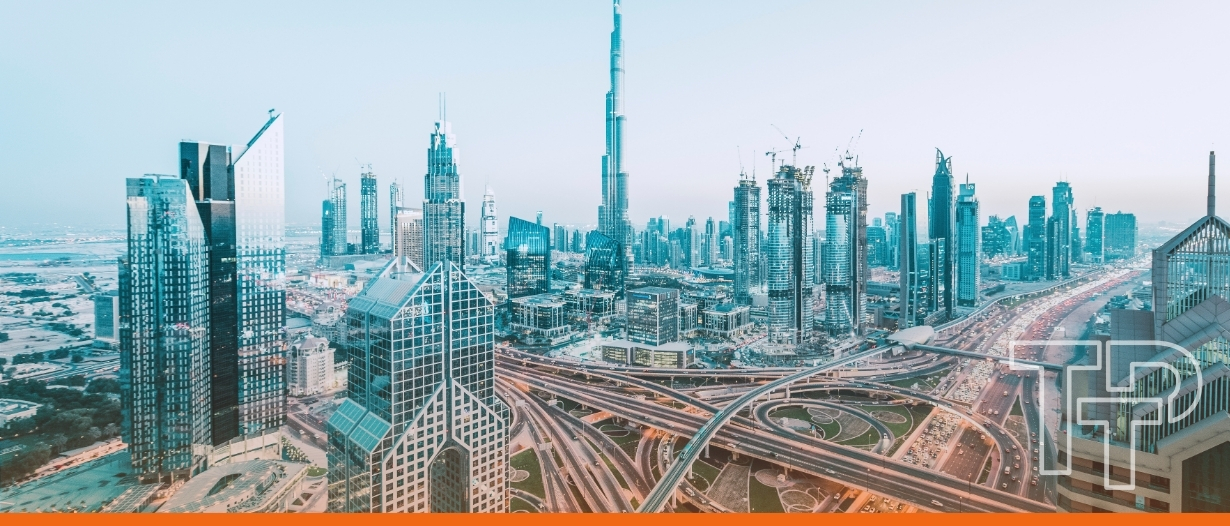
In response to the climate emergency, the Gulf Cooperation Council (GCC)’s economies are diversifying – a strategy designed to grow the economy and build resilience against future shocks. International trade corridors are shifting in response.
Commerzbank’s Gerald Dannhaeuser, Regional Head of Financial Institutions for GCC, and Mehtap Ak-Sisman, Senior Representative in Dubai, consider how sustainability, tourism, international sports and technological innovation are driving new opportunities in the GCC.
The GCC’s economies are undergoing a profound change in response to the climate emergency and the need to phase out fossil fuels. It is no surprise that governments are setting ambitious targets to transform the region’s traditionally hydrocarbon-based economies.
A pivot towards green growth and diversification is high on the agenda for the GCC, as it seeks to address depleting oil reserves, mitigate climate risk, and combat growing concerns around rising sea levels. These factors – along with the GCC members’ commitment to the COP28 pledges and other global sustainability targets – have galvanised the region’s resolve to move away from its historic reliance on fossil fuels.
Even while easing oil production quotas to the Organisation of the Petroleum Exporting Countries (OPEC+), the GCC is making clear strides towards cleaner forms of energy generation, seeking to position itself as a strategic trade partner for Europe on the back of evolving energy needs. Here, the UAE, Oman, Qatar, and Saudi Arabia are making major investments. The UAE plans to invest $54 billion in green hydrogen, solar, nuclear power, and carbon capture technology, among other forms of renewable energy, over the next seven years. Saudi Arabia’s flagship economic strategy aims for 50% of its energy to come from renewable energy resources by 2030, and its NEOM Green Hydrogen Solar PV Project is set to be the world’s largest green hydrogen facility once completed by the end of 2026.
In response to a changing world, and shaped by state-led economic strategies, GCC nations are shifting their fossil fuel-based economies not just toward sustainable sources and renewable technology, but also to tourism, fintech, and broader trade opportunities.
The economic potential is written in the figures: GCC non-oil GDP growth (3.6%) outstripped the overall growth rate of 2.4% in 2024, and 2025 is forecast to be even more prosperous, with growth likely to hit 4.9%. This showcases the GCC as an up-and-coming, strategically important location for global trade among corporates, governments, and financial institutions. To further promote trade and investment, GCC governments are introducing policies to improve their business environment for corporates and investors, as well as to encourage greater international collaboration and sharing of expertise. The UAE, for example, is a signatory of the GCC Free Trade Agreement with countries including New Zealand and Singapore, and is currently in talks with the European Union, Japan, and Southern Common Market (Mercosur) member countries to broaden cooperation. Such agreements will support both the UAE’s global reputation as a trade hub as well as its economic diversification strategy.
Saudi Arabia is adopting a similar tack, seeking to boost its productive relationship with Germany (which mainly exports machinery, motor vehicles, pharmaceuticals, electrical engineering, and chemical products to the region). In 2024, Germany’s exports to the GCC totalled $11.39 billion, with $9.53 billion worth of goods going to Saudi Arabia. Regional diversification is not only accelerating such relationships but is also leading to new opportunities for growth.
Tourism is another of the key developmental areas upon which the GCC has placed its sights, in the conviction that it, too, will become a driver of trade growth. In Saudi Arabia, Oman, and the UAE, tourism is a rapidly growing marketplace.
Saudi Arabia, for its part, has been investing heavily in tourism-related infrastructures in recent years, including hotels, airports and transport, with the Ministry of Tourism announcing a 10-year $800 billion tourism investment package. Oman is also promoting itself as a top tourist destination and is experiencing robust economic growth as a result. By advertising the appeal of its cultural landmarks and diverse natural landscapes – as well as its newly-built cable cars, ziplines, and mountain trails – Oman is attracting more tourists than ever. In 2024, Oman welcomed over 3.5 million visitors, representing a 35% increase compared with 2022.
The hosting of international sporting events is another diversification strategy for the GCC. Since 2021, Saudi Arabia has invested at least $6.3 billion in sports-related opportunities, including the 2034 World Cup and the Women’s Tennis Association (WTA) Finals.
Since the 2022 World Cup, Qatar has also invested heavily in initiatives focused on building its status as a global sporting hub. Beyond being the host nation for the 2027 FIBA Basketball World Cup, it established the first sports business district in the region, which aims to create new business opportunities by attracting a range of multinational sports companies (from sportswear and equipment to training and legal companies) and by extending numerous incentives and service packages.
Such initiatives are bearing fruit. In 2023, the GCC saw just over 68 million international tourist arrivals, a 43% increase compared to 2019. The revenue generated by tourism reached $110.4 billion in 2023, a 28% increase compared to 2019, and amounted to almost 59% of the 2030 target.
All of this change is having a positive snowball effect on business, but it needs financing. By hosting global sporting events, attracting great numbers of tourists, and pivoting toward a more sustainable economy, the GCC has, in turn, opened up innumerable opportunities for financial institutions to support its growth.
State-owned sovereign wealth funds (SWFs) have proven highly successful in financing non-oil economic initiatives. The GCC is home to seven of the top 15 SWFs globally – with the UAE’s Abu Dhabi Investment Authority (ADIA) ranking fourth. In Saudi Arabia, the Public Investment Fund (PIF) has played a crucial role in financing the sustainable development aspect of the Vision 2030 plan, which aims to increase economic, social, and cultural diversification by 2030, having created and issued two green bonds to support energy diversification. A Saudi consortium only recently committed $8bn to developing 15GW of solar and wind farms in the country.
Furthermore, Saudi Arabia, the UAE, and Bahrain have become leading regional fintech innovators – and home to four of the main regional fintech hubs: Bahrain Fintech Bay, Abu Dhabi Global Market, Fintech Hive at Dubai International Financial Centre, and Fintech Saudi. In February 2024, the Qatar Investment Authority (QIA) also stepped up to the mark, launching a $1 billion venture capital fund to attract international and regional venture capitalists and entrepreneurs to the country. The fund focuses on fintech, edtech, and healthcare innovation.
Other initiatives, such as the $100-million, Bahrain Development Bank-funded Al Waha, as well as the Central Bank of Bahrain (CBB) regulatory framework on fintech, have helped to support innovation and fintech start-ups across the GCC.
Ultimately, economic growth only represents success in this context if it moves toward creating a more sustainable, low-carbon, and climate-friendly environment.
International banks will be needed to extend green, sustainable, and transition finance to enable businesses within the GCC to launch their green transitions, as well as to support investment in renewable technologies and resources. Effective trade financing solutions are also vital to facilitating economic diversification, helping corporates trade confidently within the market and with new counterparties.
As the region progresses towards its goals, those in the financial sector will continue to be key partners, ensuring capital flows to those sectors and projects where it is most needed. As an international bank with trade finance in our DNA, a suite of innovative financing solutions under our belts, close relationships with correspondent partner banks across the GCC – as well as a representative office in Dubai – Commerzbank is well positioned to effectively support clients in identifying and capturing this next generation of opportunities.

Oct 17, 2025

Oct 16, 2025

Oct 16, 2025

Oct 16, 2025


Oct 15, 2025

Trade Treasury Payments is the trading name of Trade & Transaction Finance Media Services Ltd (company number: 16228111), incorporated in England and Wales, at 34-35 Clarges St, London W1J 7EJ. TTP is registered as a Data Controller under the ICO: ZB882947. VAT Number: 485 4500 78.
© 2025 Trade Treasury Payments. All Rights Reserved.