 English



First Brands: What the headlines miss – And what Supply Chain Finance (Payables) really means

 Aparna Soni
 Gregory Sampson
Aug 18, 2025
Gregory Sampson
Aug 18, 2025
At a time when environmental and social sustainability are no longer optional in global trade, the burden of compliance is increasingly falling on small businesses. What was once the domain of large corporates is now a baseline expectation across the supply chain. For many small- and medium-sized enterprises (SMEs), especially those in emerging markets, this presents a major barrier as fragmented standards, high costs, and confusing requirements can shut them out of export markets altogether.
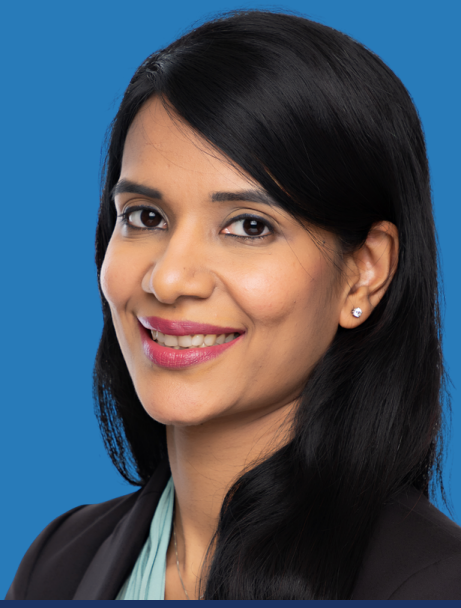
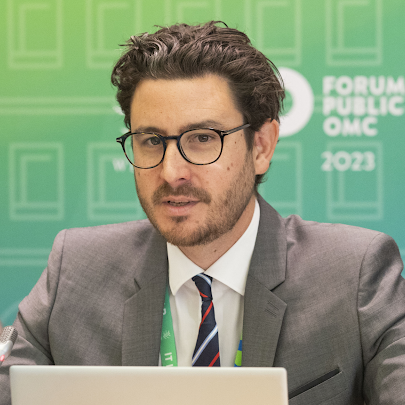
To address this, the Asian Development Bank (ADB) and the International Trade Centre (ITC) have launched the SME Sustainability Toolkit – a digital solution designed to help small firms understand sustainability requirements, identify gaps, and build a roadmap to compliance. To learn more about the toolkit and discuss how this initiative could reshape SME access to sustainable trade and finance, Trade Treasury Payments (TTP) spoke with Aparna Soni from the ADB and Gregory Sampson from the ITC.
For SMEs, sustainability standards are often a gatekeeper as much as they are a gateway. Sampson said, “Sustainability standards can actually be a bit of both, right? They can both be a barrier and an actual opportunity.” On the barriers side, the hurdles are real and immediate.
First is cost. “Compliance with these sustainability standards takes time. They’re expensive, require a lot of resources, and often these small businesses lack access to these resources to pay for things”.
Second is confusion. “We’re talking about hundreds of standards, and it’s very hard for a small company to navigate through this landscape and to know even which one applies to them.” With limited internal capacity, many SMEs simply do not have the bandwidth to decode this web of rules.
The third and perhaps most consequential hurdle is exclusion. “If you don’t comply with these standards very often, you can be excluded from access to markets altogether. These are becoming mandatory requirements by buyers in Europe, North America, and Asia.”
Soni echoed this frustration, particularly for firms in developing markets. “There are just far too many standards, far too many compliance requirements, and none of them are easy to understand… We have actually tried, as an end user, to read through some of these sustainability requirements, and it was mind-boggling; we just couldn’t make sense of it.”
The SME Sustainability Toolkit is designed to cut through that noise. Rather than add another layer of complexity, the tool works more like a digital coach that can guide SMEs through a streamlined, structured process to assess readiness and map out their next steps.
“The SME toolkit works indeed a bit like a sustainability coach,” said Sampson. “It helps small businesses make sense of complex sustainability rules.” Built from years of field experience, the toolkit draws on lessons from ITC’s work with SMEs undergoing multi-month sustainability coaching programmes. But instead of taking six months, the tool can deliver actionable insights in about an hour.
It begins with a quick scan: “You’re doing more of a readiness check. You’re doing a quick scan to see where your business stands. SMEs have to answer a few guided questions about their operations… we’re talking about 13 very targeted questions.” Using AI, the tool then generates a report showing where the SME is already performing well and where it falls short.

From there, SMEs can move on to a more detailed sustainability assessment, which provides “more tailored advice and will actually match the right standards for you… based on your company size and the state of its sustainability and evolution.”

The final stage is the action plan. “This is where we really provide a personalised road map with potential areas that need to be improved. We provide access, we connect them to resources that can help them implement some of the guidance that is provided by the tool.”

Crucially, the entire process is sector- and geography-specific. For instance, an SME in Bangladesh exporting garments to Germany would receive advice tailored to that context. “Let’s say the company identifies that standard C is the best match,” explained Sampson. “Then they can go into the action plan and really have a good understanding and personalised roadmap as to what it would take to comply with that standard C, which is a requirement of the buyer in Germany.”
What starts as a compliance exercise can quickly become a growth opportunity. Soni said, “It is costly to reach that journey of sustainability, and thus it is seen as a barrier. Through this toolkit, we have tried to mitigate this.”
By focusing on readiness (the most resource-intensive and confusing part of the journey), the toolkit enables SMEs to invest more effectively in certification, which in turn opens doors to export markets. “Once you’re ready and you get yourself certified, it just provides a lot more opportunities to target those export markets,” she said.
Access to finance is another benefit. “Even the financiers, the investors, and the bankers these days look at certain minimum expectations on the sustainability requirements… It will also help banks to identify where their borrower stands… and work together with their borrowers to get themselves certified and be ready.”
This dual purpose (enabling both market access and financial eligibility) is at the heart of the initiative. “We’re not just helping SMEs comply,” said Soni. “We’re also helping them grow.”
There are implications for policymakers, too. Soni noted that “the data points which these toolkits can generate help the lawmakers to reallocate their resources based on the needs of the SMEs.”
While the initial focus has been on usability, the roadmap ahead aims to deepen the toolkit’s integration across the value chain. Sampson explained that several upcoming features are designed to close existing gaps in how sustainability performance is measured, verified, and used in financing decisions.
One of the most immediate additions will be a green investment repository, which allows SMEs that complete their sustainability assessments to be made visible to financiers actively seeking credible, sustainability-ready businesses. This creates a direct bridge between compliant SMEs and the capital providers looking to support them.
At the same time, the team is developing plug-and-play modules for banks. These lightweight tools are intended to allow local financial institutions to integrate the toolkit into their existing platforms and screen the sustainability credentials of SME clients more effectively. As Sampson described it, the idea is to give banks “access to credible, standardised information and also to assess the risks of financing a potential SME.”
Another core addition will be the creation of a Certified Business Registry, enabling banks to verify the authenticity of sustainability certifications. “We are already engaging with 11 standards that are sharing information with us about all the businesses that have sustainability credentials, and we will make this available,” said Sampson. This registry is meant to help close the verification gap and ensure that certified businesses can credibly present their credentials to financiers and buyers.
The overarching goal is to give both banks and buyers access to reliable, standardised data, while giving SMEs a way to prove and leverage their sustainability performance.
The SME Sustainability Toolkit is an infrastructure project. It attempts to bridge the gap between growing ESG requirements and the capacity of SMEs to meet them. If successful, it could play a pivotal role in making sustainable trade more inclusive.
Soni outlined two success metrics for the coming year: “First, I would really like to see thousands of SMEs being able to use the toolkit and not just tick the boxes and complete the checklist, but really genuinely improve their practices and access the new opportunities. Secondly, I also want to see the financial institutions and the buyers using this toolkit as a data centre.”
As ESG expectations continue to rise, tools like this may be essential to ensure SMEs are not left behind. Trade is changing, and compliance is the new gateway for many smaller firms. The next question is whether stakeholders across the ecosystem will adopt the tools that allow small businesses to pass through it.

Oct 17, 2025

Oct 16, 2025

Oct 16, 2025

Oct 16, 2025


Oct 15, 2025

Trade Treasury Payments is the trading name of Trade & Transaction Finance Media Services Ltd (company number: 16228111), incorporated in England and Wales, at 34-35 Clarges St, London W1J 7EJ. TTP is registered as a Data Controller under the ICO: ZB882947. VAT Number: 485 4500 78.
© 2025 Trade Treasury Payments. All Rights Reserved.