 English



First Brands: What the headlines miss – And what Supply Chain Finance (Payables) really means

 Carter Hoffman
Jul 28, 2025
Carter Hoffman
Jul 28, 2025
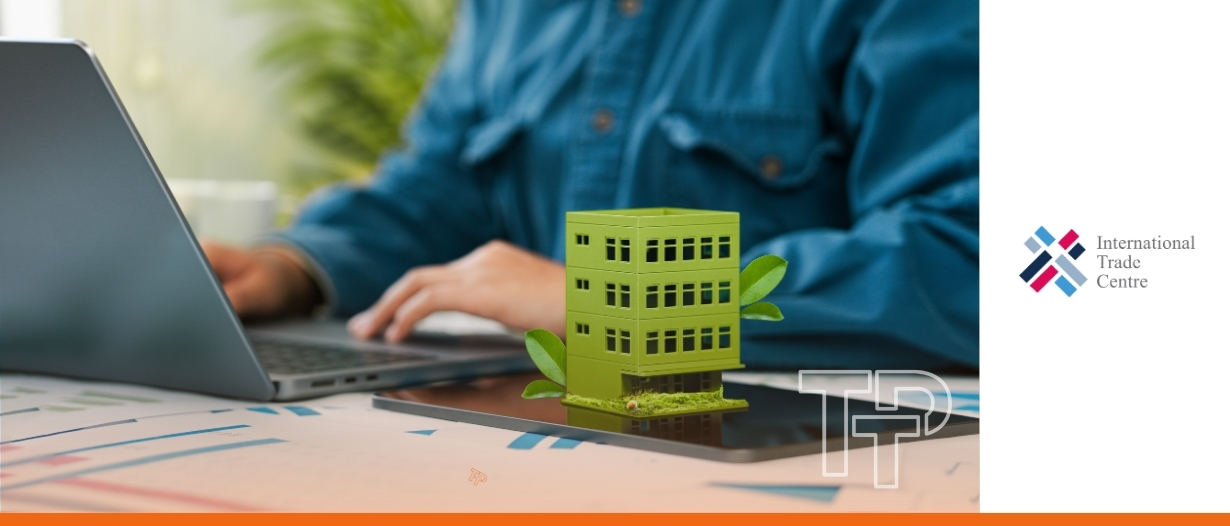
As global climate action gathers pace,
Small businesses have an unenviable status in the push for global climate action, being expected to lower emissions, bolster resilience, and remain competitive, all at the same time. For many of them, however, the tools, finance, or incentives to do so just aren’t there.
A new white paper from the International Trade Centre (ITC), SME Green Competitiveness, examines this very topic.
Small businesses comprise 90% of the world’s firms and over half the world’s workforce, but their role in the climate equation is more complex than it first appears. While no single SME is likely to rank among the world’s top emitters, collectively they account for an estimated 40-60% of global greenhouse gas emissions. At the same time, they are disproportionately vulnerable to climate risk, from supply chain disruptions to physical damage caused by floods, drought, and extreme weather events.
This dual exposure (as both contributors to and casualties of climate change) is well documented in ITC’s firm-level data. According to survey results covering over 6,000 companies across Africa and Latin America, 61% of SMEs report being exposed to environmental risks, yet only 38% have invested in adaptation measures. Even fewer (just 37%) report active efforts to reduce their environmental footprint.
The reasons for inaction vary. Some are financial, others informational, and many structural. Unfortunately, the cost of delay is becoming increasingly clear, both environmentally and economically. Environmentally, many scientific observers caution about the climate change cliffs edge we are approaching. Economically, companies that fail to engage with sustainability are likely to find themselves more exposed to risk while also missing out on new commercial opportunities.
Despite low overall adoption, the business case for green competitiveness is strong. Across nearly every metric (like cost savings, market access, innovation, and export performance) firms that invest in sustainability consistently outperform their peers.
Among SMEs that implemented climate mitigation measures, 80% reported new business opportunities. Of those, 41% expanded into new markets, and 44% reported retained access to existing ones.

Note: Among companies that reported to invest in measures to reduce the negative environmental impact of their operations, respondents were asked: ‘Did these investments present any of the following opportunities for your business?’. Options included: (1) Access to new markets, (2) Keep existing markets, (3) Increased production, (4) Increased product quality, (5) Lower input costs, (6) New products or services, (7) Access to finance, (8) Other opportunities, and (9) No new opportunities. The chart in the left describes the share of companies that report experiencing any of the opportunities listed.
Source: ITC calculation based on ITC SME Competitiveness and ITC-CPCCAF Surveys with 3,578 firms in Argentina, Benin, Botswana, Burkina Faso, Cameroon, Chad, Colombia, Congo, Côte d’Ivoire, Eswatini, Gabon, Mali, Morocco, Mauritania, Democratic Republic of Congo, South Sudan, Senegal, Togo, Zambia and Zimbabwe.
At the operational level, investments in sustainability often translate directly into resource efficiency and financial savings. In one ITC project, 56 firms implementing low-cost energy and resource-efficiency measures collectively saved 15 tonnes of CO₂ equivalent and $14,700 annually per firm on average.
The link to innovation is also notable. SMEs that undertake adaptation or mitigation actions are nearly 20 percentage points more likely to report product or process innovation. In Vietnam and Brazil, for example, environmental certification has been shown to correlate with higher levels of process innovation, especially among export-oriented firms.
If the business case is clear, why aren’t more SMEs acting? The ITC identifies three persistent and overlapping challenges that inhibit progress: limited access to finance, lack of skills and awareness, and an increasingly complex regulatory environment.
SMEs are almost 50% less likely to invest in mitigation if they have poor access to finance. Yet most green finance mechanisms are designed with large corporates in mind, complete with reporting requirements, eligibility standards, and application procedures that small businesses struggle to meet.

Note: A firm’s level of access to finance was determined by combining three variables. Respondents were asked ‘Has this business applied for a loan in the last three years?’, ‘What was the outcome of that application?’ and ‘Why did the establishment not apply for a loan, or reject the offer given by the bank?’ Once variables were combined into a single variable ranging from 0–100, firms were classified as having ‘poor’ access to finance if they scored 0–40 and ‘strong’ access to finance if they scored 60–100. These responses were then linked with the question: ‘In the last three years, did your company invest in measures to reduce its negative impact on the environment?’.
Source: ITC calculation based on ITC SME Competitiveness Surveys with 2,508 firms in Argentina, Botswana, Chad, Eswatini, South Sudan and Zimbabwe.
Informal businesses, in particular, are locked out of formal financial systems altogether, lacking the documentation or collateral typically required by lenders. Even where financing is available, high upfront costs, long payback periods, and unclear returns make green investments a hard sell.
As the ITC whitepaper notes, climate action often reduces risk rather than generating immediate profit, which can be difficult to model (and even harder to monetise) for small firms operating under short-term financial pressure.
Finance alone will never be enough. SMEs also need the technical knowledge to identify, implement, and manage sustainability measures. Yet many operate without structured HR practices or training budgets. Firms with poor hiring systems were 17 percentage points less likely to invest in mitigation, according to ITC data.

Note: Respondents were asked: ‘Please rate the extent to which your company has an established hiring process to hire the best candidates?’. Options ranged from 1 (no established process) to 6 (strong established process): answers of 1-3 were allocated to the category ‘poor hiring process’, while answers of 4-6 were allocated to the category ‘strong hiring process’. These responses were then linked with the question: ‘In the last three years, did your company invest in measures to reduce its negative impact on the environment?’.
Source: ITC calculation based on ITC SME Competitiveness Surveys with 4,002 firms in Argentina, Benin, Botswana, Chad, Colombia, Eswatini. South Sudan and Zimbabwe.
Even where skilled workers are available in the labour market, small firms may struggle to recruit or retain them, especially if better wages or more secure employment exist elsewhere. Training programmes tailored to SMEs are rare, and most technical education systems are not yet aligned with green economy needs.
Finally, regulation presents a growing compliance challenge. More than 300 environmental standards are now tracked globally, and 73% of SMEs surveyed cite environmental regulations as a barrier to continued operations.
The pace of regulatory change adds to the problem. From carbon accounting to biodiversity rules, product labelling to procurement conditions, SMEs must now navigate through a dense fog of requirements. Many lack the administrative capacity to track and interpret these changes, let alone act on them.
Few hold recognised sustainability certifications (just 18%, according to ITC’s survey) and many are discouraged by opaque procedures, inconsistent enforcement, or overlapping mandates from multiple authorities.
So how do we solve these problems?
Rather than offer prescriptive solutions, the ITC whitepaper puts forward a menu of voluntary, non-binding actions that governments can adapt to their national context. These fall under three main categories: affordability, capability, and regulatory reform.
Several country-level examples provide useful benchmarks. In Rwanda and South Africa, green national funds channel public and private finance into SME-focused climate projects. In Ghana, a Green Finance Facilitator programme helps small businesses prepare funding applications and match with financial institutions.
Thailand’s BCG Economic Model offers concessional loans of up to $1.5 million for green investments, while Vietnam provides 15-year corporate tax holidays for firms in renewable and clean energy. In Mauritius, green loans offer 100% financing and extended repayment terms.
On the skills side, Brazil has implemented a national climate curriculum across schools. Kenya’s Green Skills and Learning Hub integrates green training into vocational institutions. And in Peru, targeted SME support programmes provide technical assistance to help firms meet international environmental standards.
Regulatory innovation also features prominently. Singapore’s streamlined ESG reporting framework for SMEs reduces administrative burden while aligning with global disclosure standards. Korea exempts qualifying SMEs from routine inspections, while Moldova and Brazil use green public procurement rules to create new markets for sustainable goods and services.
As the ITC white paper makes clear, greening the SME sector is not a luxury that the world can afford to save up for. Small businesses are too numerous, too central, and too exposed to be excluded from national climate strategies.
Firms that act now will be better positioned to deal with supply chain shifts, meet customer expectations, and comply with emerging regulations. Countries that support their SMEs in doing so will see broader economic dividends.
The tools exist. The challenge is aligning them in a way that lowers friction, amplifies incentives, and delivers results at scale.
To explore the full policy recommendations and country case studies, read the ITC White Paper on SME Green Competitiveness.

Oct 17, 2025

Oct 16, 2025

Oct 16, 2025

Oct 16, 2025


Oct 15, 2025

Trade Treasury Payments is the trading name of Trade & Transaction Finance Media Services Ltd (company number: 16228111), incorporated in England and Wales, at 34-35 Clarges St, London W1J 7EJ. TTP is registered as a Data Controller under the ICO: ZB882947. VAT Number: 485 4500 78.
© 2025 Trade Treasury Payments. All Rights Reserved.